It is a reasonable truth, at this point, to say that times are hard.
The phrase "times are hard" was, till some time ago, evocative of a ravaged society trying to piece itself together post the second world war; now it is in every mass e-mail I have received in the past month: the word "times" prefaced or suffixed with whatever adjective seems most palatable.
In a cursory assessment of my inbox, 'uncertain' is the most popular, followed by 'unprecedented'. With this, there can be no disagreements. Times are uncertain, and they are most definitely unprecedented.
'Dystopian' takes third place: it is here that I cannot concur.
There are no strangers to dystopia in India. It comes to the northern parts of our country late each October: blankets of smoke covering city after city; the air essential yet toxic; the sky indiscernible in grey. In visualisations of dystopia, therefore, the present is a misfit.
In October late last year, I made one such dystopian journey through three most-affected states of the northern part of this country to reach Patiala. Upwind of — and thus, unaffected by — all the smoke, it had, by the next morning, pristine blue skies and perfectly breathable air. It was a sight I could not bring myself to savour, since it is marred by the knowledge that tragedy was afoot, elsewhere, at the same moment.
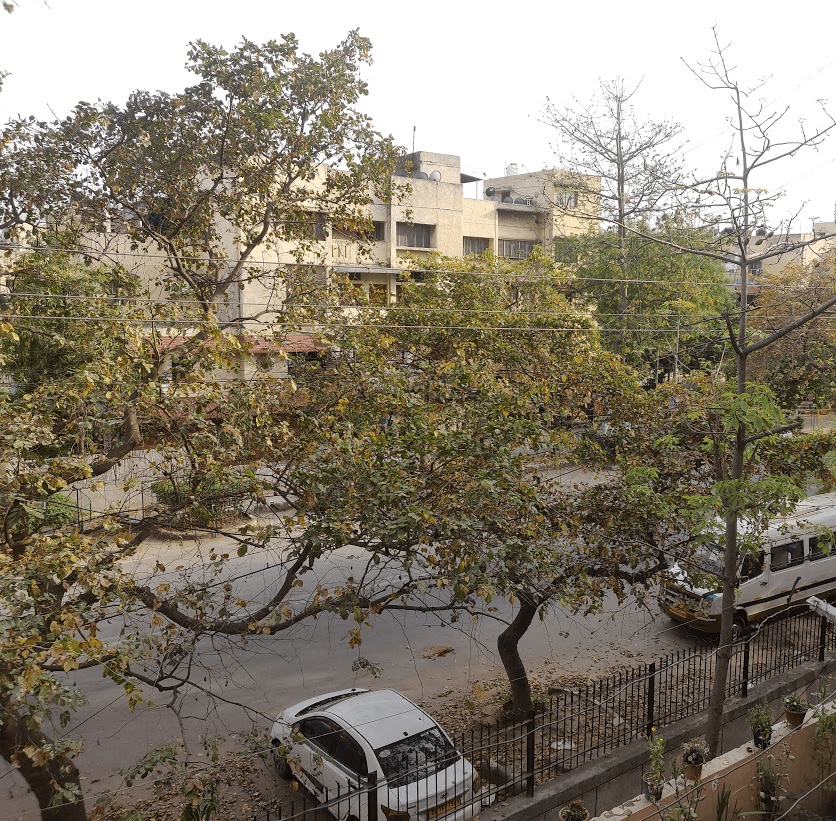
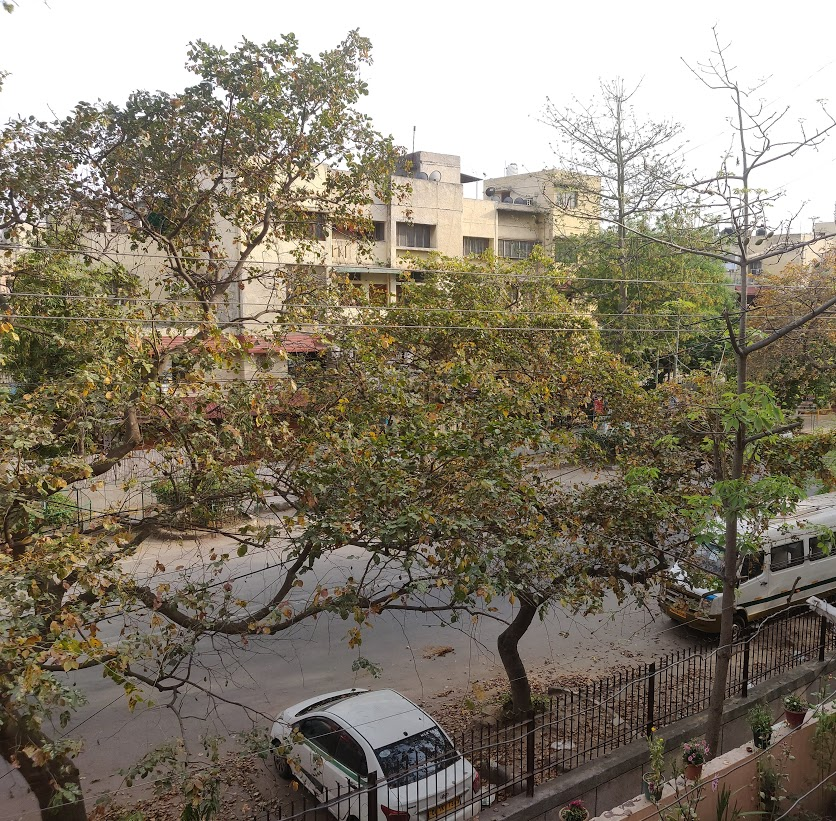
A suitable parallel has emerged in the past few days: looking outside from the window of my room – a daily event even when the windows were not confines – has evoked a powerful nostalgia for times of childhood.
Spending two decades in the same house allows for an extraordinary longitudinal assessment of life: experiences are anchored to an environment that changes very little; memory, thus, exists in a stunning parallax of successive experiences studded against surroundings whose transformation is far more gradual.
Gradual, but inevitable. The house has changed, and so has the neighbourhood. Principally, it should suffice to say that there are far more people now; and consequently, there is far more of everything that we bring along wherever we go.
There are, certainly, positive entries in that list; however, the present has shone a spotlight on the negative - since it so starkly highlights what happens when we subtract ourselves from the mix. The trash on the road is missing; the permanent cacophony of traffic is absent. Surroundings are clean, and peaceful. The dogs are confounded.
It is a situation that closely resembles what I would have seen looking out of the same window ten — or perhaps even greater — years ago. In any other scenario, this redux would be cause for celebration. Now, however, an acknowledgement similar to the one in Patiala last October renders the prospect of any happiness illegitimate: that this is a temporary fallout of mass global tragedy.
There is no certainty around what the 'normal' will look like, whenever it returns to us. Perhaps it will resemble the old normal; on some days, there seems hope that it will be better. A newer normal whose contours will be shaped by sincere national – and global – introspection. Perhaps a constructive, bipartisan public debate about issues that truly matter will finally emerge.
Not everyday, however: it would be reckless to be hopeful everyday. Like everything else that is hard to come by, hope must also be rationed.
A sign, of course, of the times.