
Noise pollution has perennially been overshadowed by its more potent relatives.
It would always appear last when I would be asked to list categories of pollution in environment class; for a major part of my life, I secretly felt that it was an entirely made up concept.
These notions were dismantled only over trips to countries other than our own. Any sound unpleasant to the ear was absent. In some cases, all sounds were absent. A realisation was cemented: every city has a characteristic sound; for some, this may be even be the sound of silence.
Consider the hypothesis that the characteristic sound of Delhi is the sound of argument. It rests on two pillars - activities that are universal in this city: haggling, and honking.
Bargaining is a necessary ingredient of the roadside commerce that dominates our city. The prospect of being able to drag prices down is often the principal draw. In essence, bargaining is a form of argument. It is polite, civil, and often even guided by implicit rules; yet, it is argument.
Vehicular horns, in Delhi as in most of our cities, are also a form of argument. They are the sound of cars, buses, trucks, auto rickshaws – and even e-rickshaws – quarrelling on the road. This vehicular language is ubiquitous here; and argument is the only communication it facilitates.
Thus, the most real description of the sound of Delhi is that it is the sound of argument. This is not an overly decorative metaphor; it is, as we have shown, rooted in practicality.
It is now 2020 and we have finally resolved – all sections of society, together – to deem pollution to be an unacceptable part of our lives. However, just as it was in environment textbooks a decade ago, noise pollution remains relegated here as well. I imagine it will be multiple more years till such a consensus arises against it.
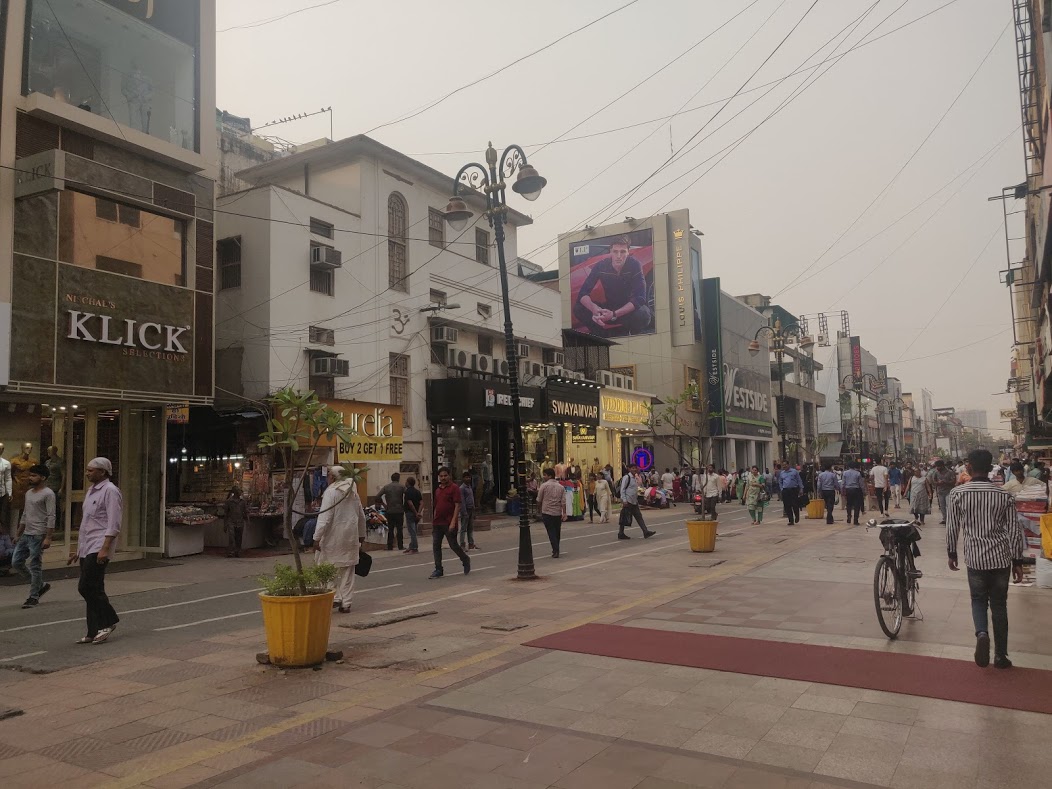
Last year, however, an aberration occurred. The 'pedestrianisation' of Ajmal Khan Road, in Karol Bagh, was attempted, and successfully completed.
Two terms of note in the previous sentence deserve special elaboration. The first is pedestrianisation, which simply means converting busy, commercial parts of cities into pedestrian-only zones.
The second is Karol Bagh.
There are places in every Indian city that sound familiar to those who have never visited it. I have never been to Chennai, but I have heard of Anna Nagar and Besant Nagar. I have been to Kochi only once; at an age when I was too young to remember anything other than blurry visuals; still, I have heard of Fort Kochi. I had heard of Indiranagar and Koramangala before I first visited Bengaluru four years ago. For Mumbai, as became clear on my first visit recently, such a list is unending. Although I cannot comment with any reasonable certainty about the nature of this list for my own city, I imagine Karol Bagh would be on it.
One of two factors contributes to any place featuring on such a list: either it is upscale, home to the affluent; or, that it is culturally popular in film, television, theatre or even the new-age currency of shared attention: memes. Karol Bagh fits both, and fits them well.
Property rates are prohibitively expensive for the middle class, a definite sign of the area being upscale. The Hanuman statue that is now a standard identifier of Delhi in Indian cinema exists here. Consequently, even if you have not heard of Karol Bagh, you have most likely seen it.
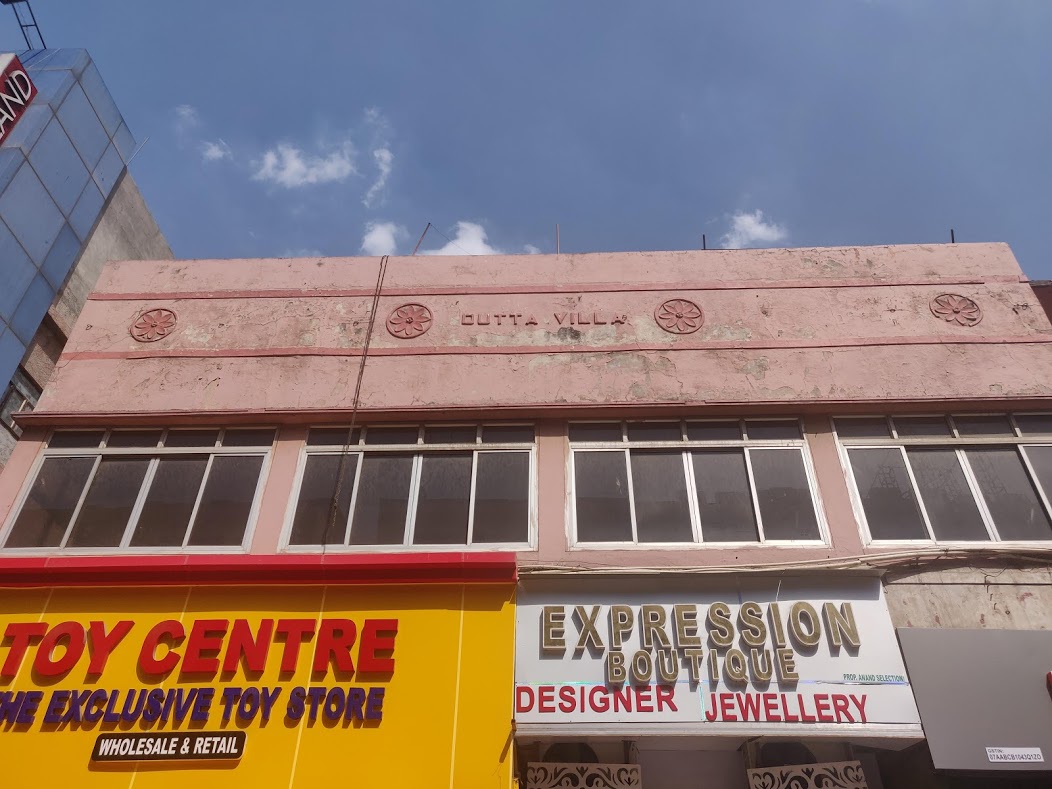
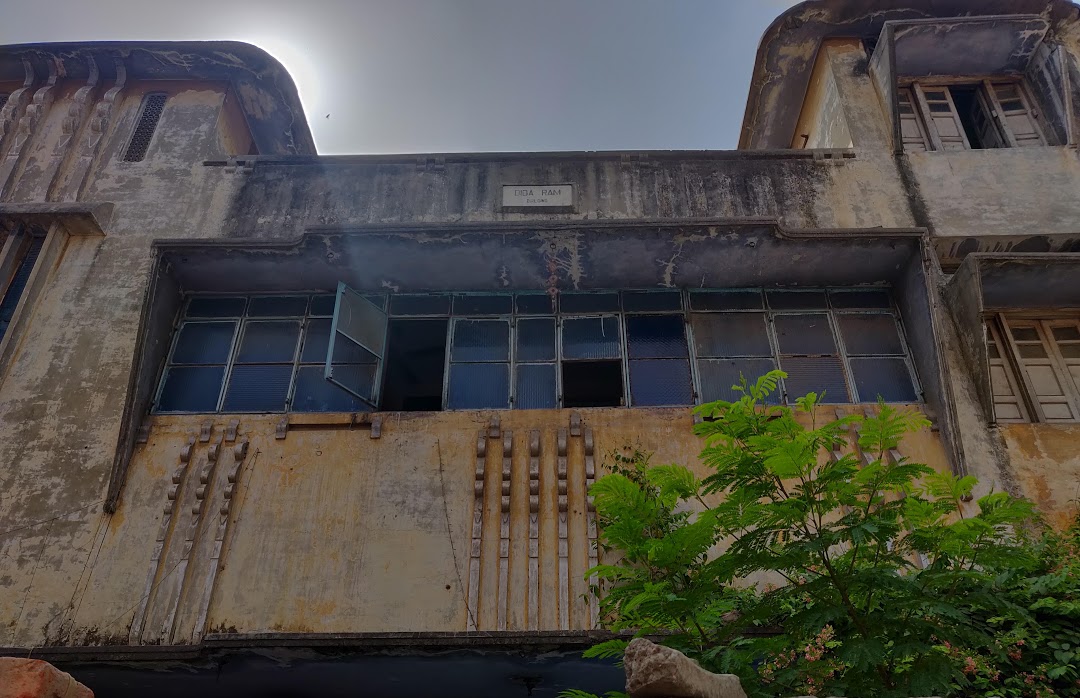
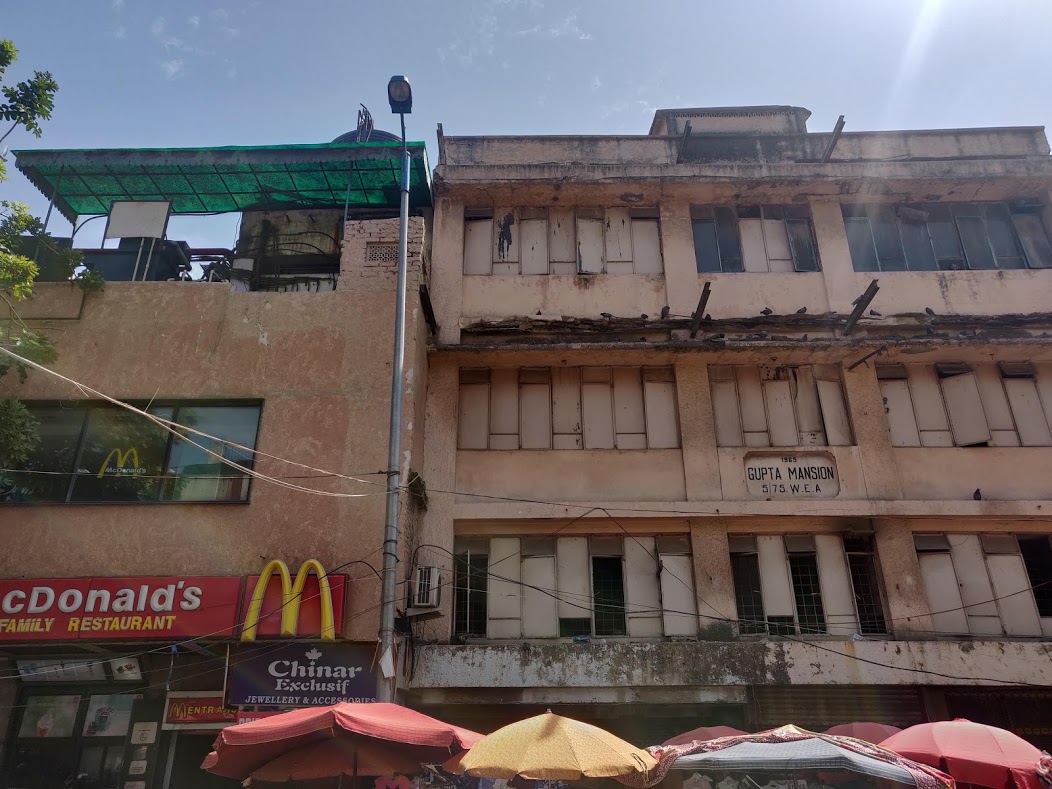
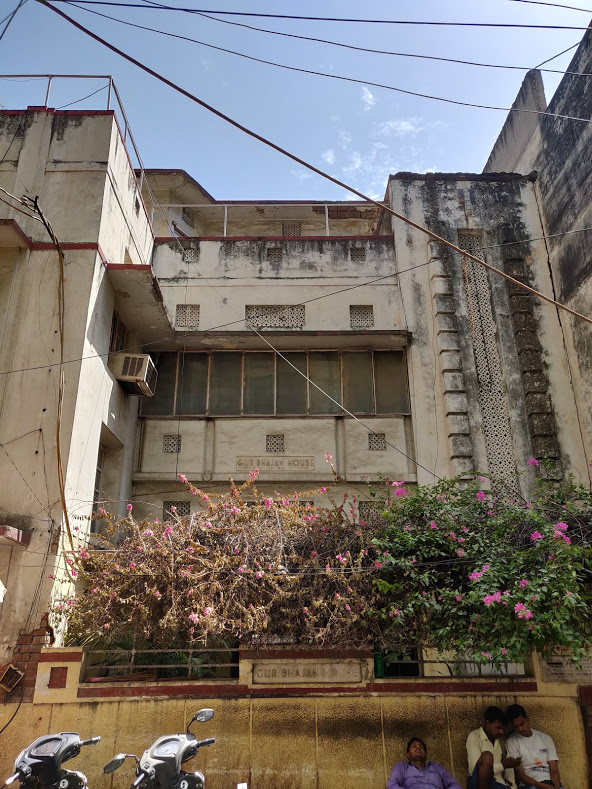
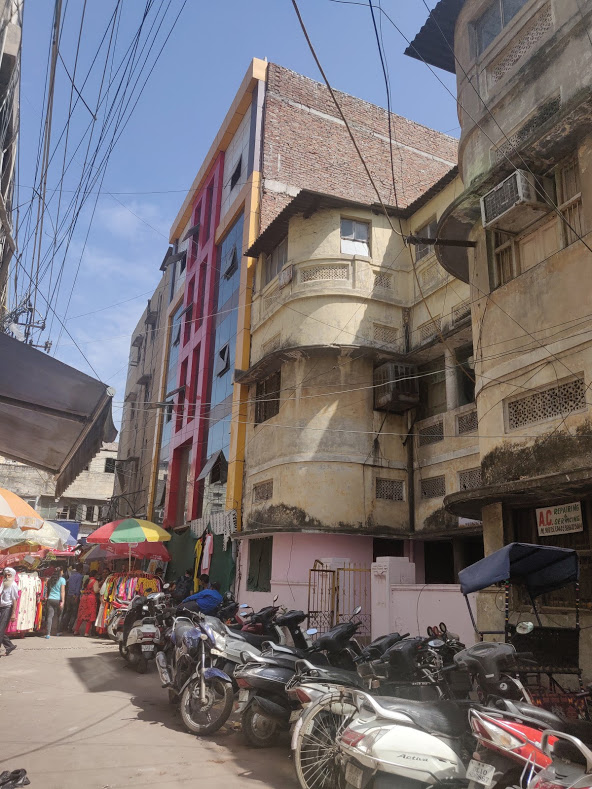
As a residential area, parts of Karol Bagh are older than the partition of India. Signboards calling the area 'WEA' still abound, and they all refer to how the houses were built as part of a 'Western Extension Area,' the 'Western' used to indicate a region to the west of the planned boundaries of British New Delhi. There was a demographic shift in 1947; the houses were occupied by businessmen and architects who spent their time helping the city around construct, and reconstruct, itself. Today the city no longer needs them, and their houses are in disrepair. The nameplates still exist; it is a testament to the futurism of those early residents that their names still look as much a part of the present as the shops that have grown around their old houses. If the year of construction were not etched onto the walls themselves, a fresh coat of paint might make anyone believe that they were built recently.
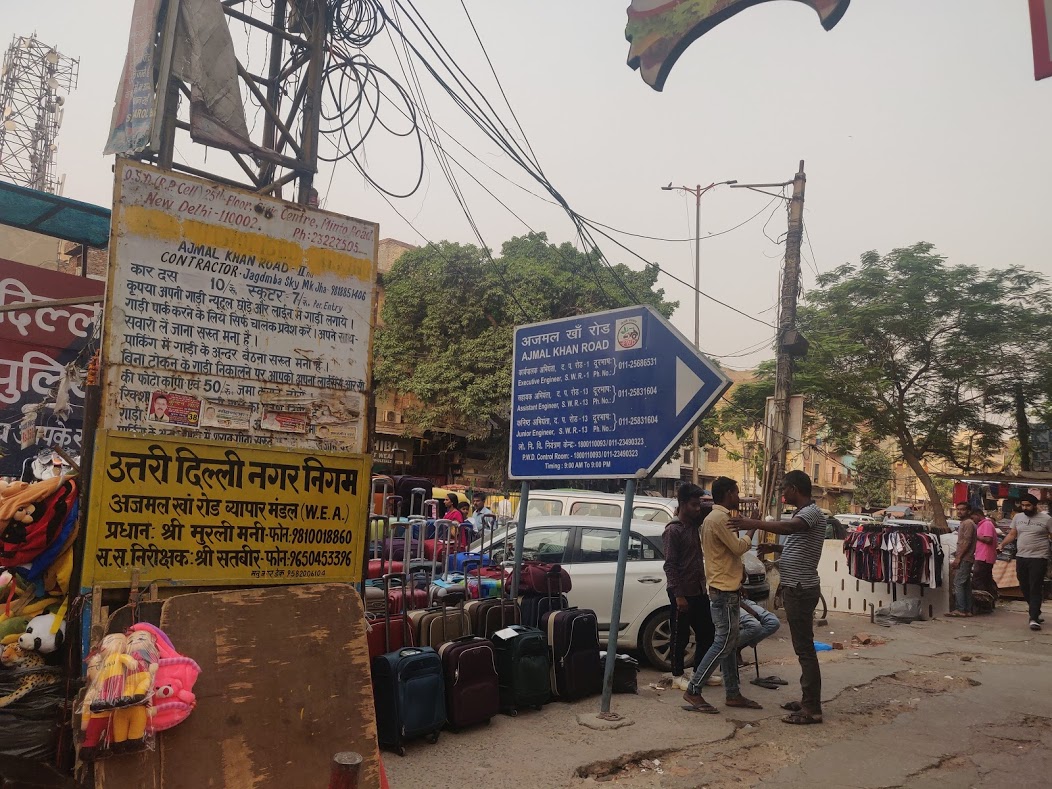
It is an understatement to say that the shops have grown around these houses. Like a ruderal species, they have colonised any, and all, vacant area. A new form of signboard has appeared, and this sort has nothing much to say except to indicate the arrival of the age of consumption. The uniformity of state-planned and licensed enterprise is absent; perhaps the loss of aesthetic value is a fair price to pay for faster, even if less than ideal, economic development.
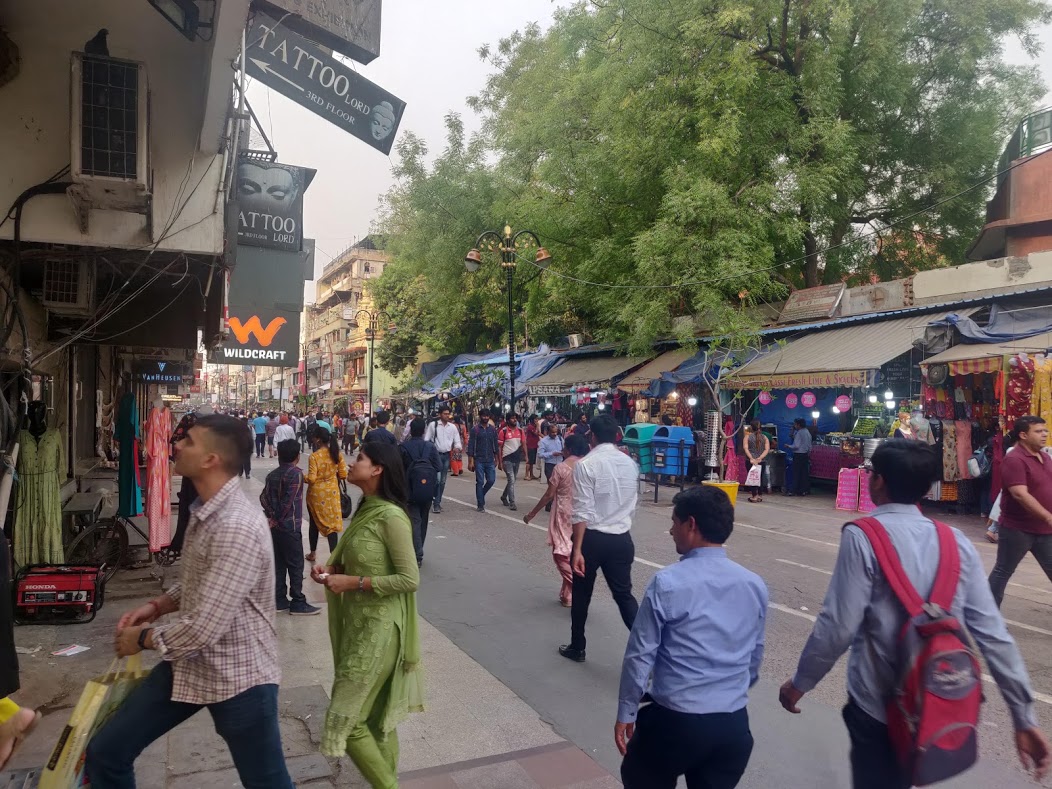
Ajmal Khan Road is one such market place in Karol Bagh: heritage structures are isolated; few and far-between. Commercial establishments ooze out of every conceivable square foot.
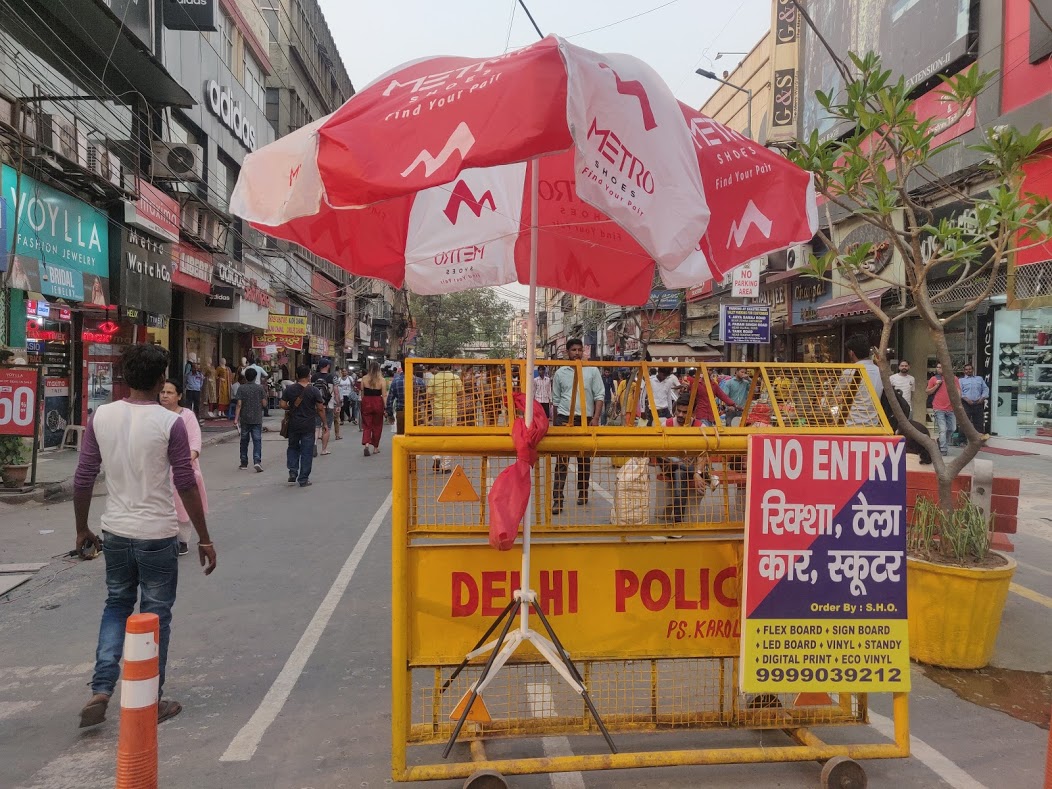
To walk on Ajmal Khan Road in 2018 was to have to navigate both parked and moving vehicles; the undulating terrain of a semi-built road, and vendors, hawkers and touts of all sorts. The road ends where the far more popular – and chaotic – Ghaffar Market begins. Thus, Ajmal Khan road was a kilometre-long preparation: being able to handle it was a pre-requisite to getting to its more disorderly cousin.
The pedestrianisation of Ajmal Khan Road shattered this delicate filtration scheme that the city had evolved over the years. This, however, is its only possible negative consequence. The only way to describe the rest is that they all contribute to create a dream.
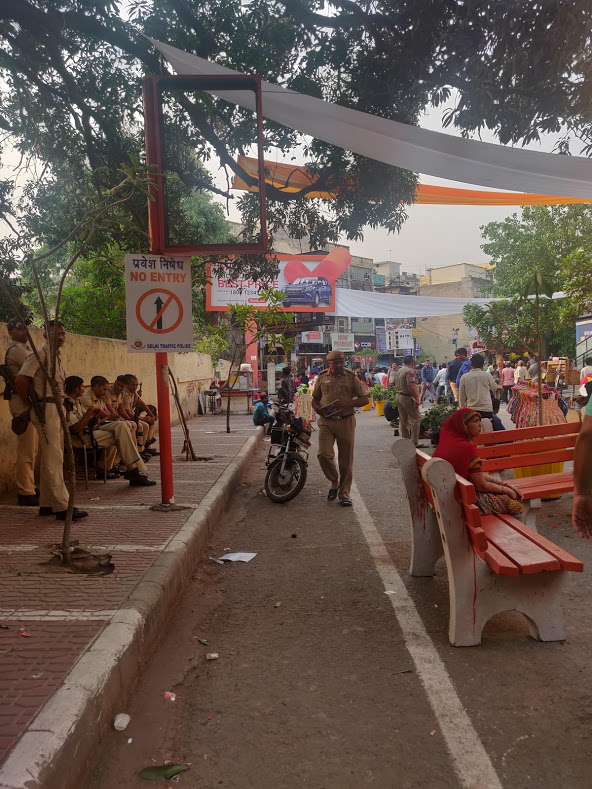
Ajmal Khan Road now allows you to sit on benches deliberately placed in the middle of the road. In a marked contrast to most other places in the city, where pedestrians are helpless, forgotten second-class citizens; here, you are respected even in the absence of a vehicle. The city has decided, uncharacteristically, to empower those who have nothing. It is unprecedented, and overwhelmingly positive.
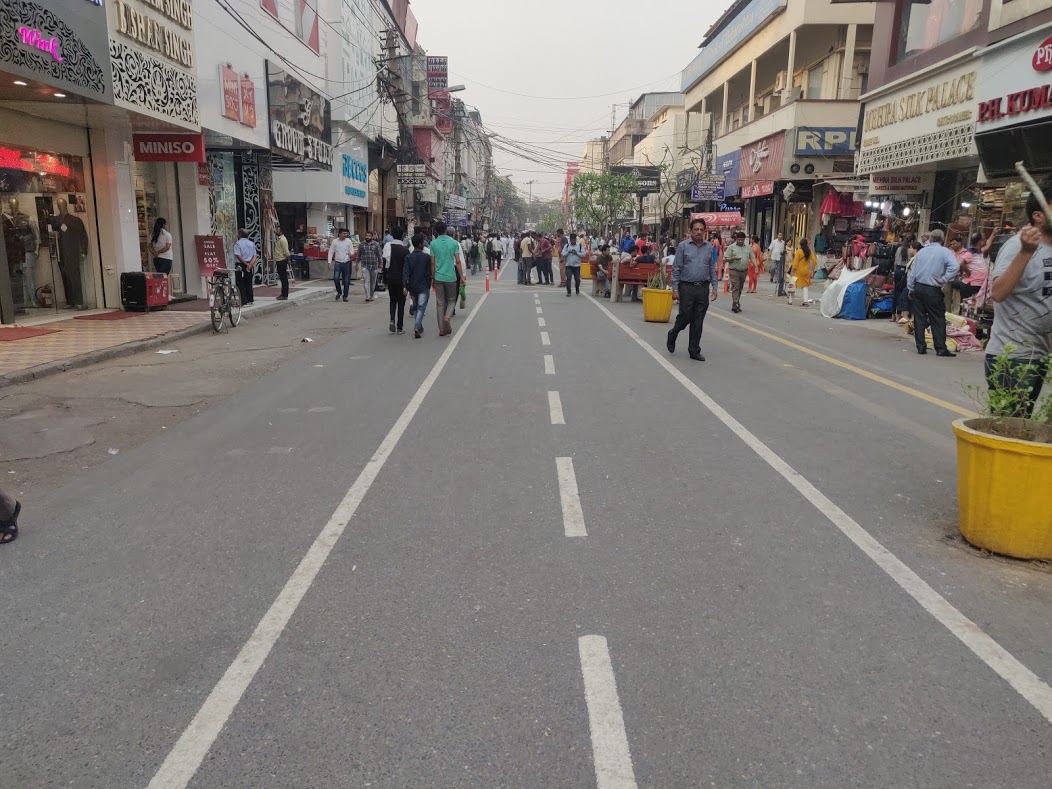
Ajmal Khan Road now provides an altogether new sound: the horns are absent, and the haggling is infrequent. I believe the two are connected – an environment free of one form of argument fosters one that is free of all.
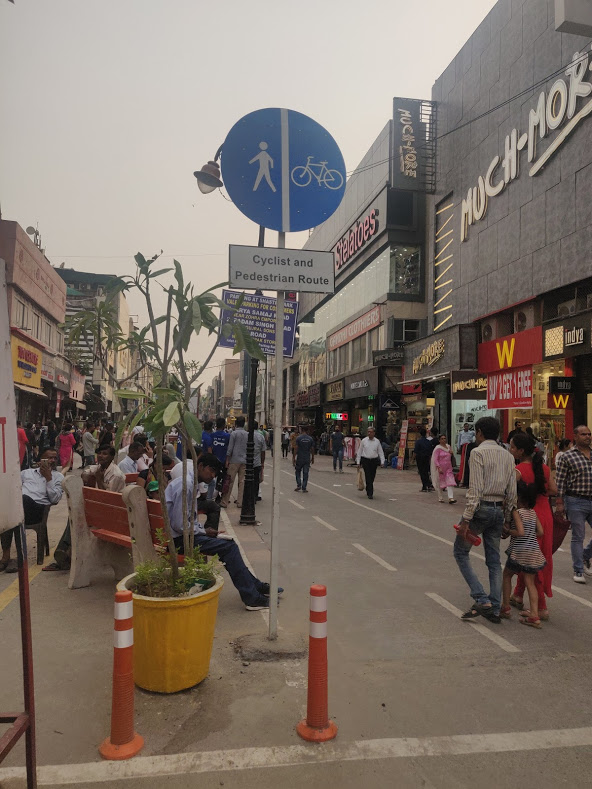
Ajmal Khan Road now allows you to stop and stand, and look at the houses they built.