
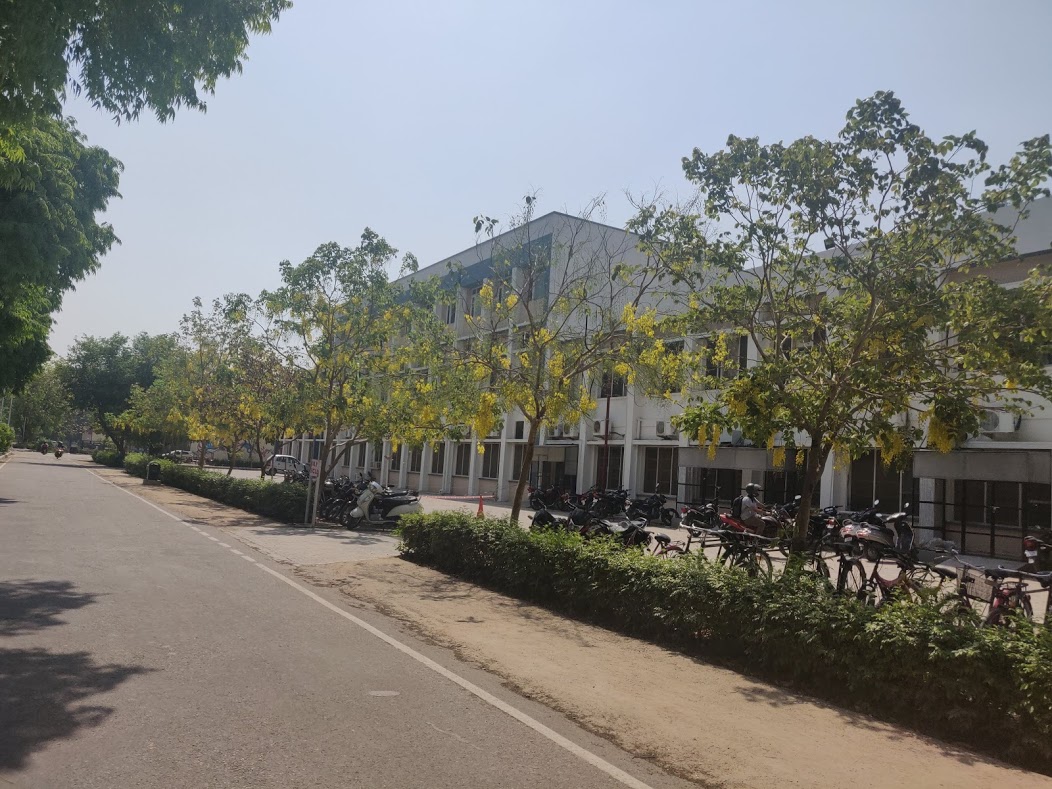
A tall Neem standing across the road from our house meant that the Neem became the first tree I could recognise from afar.
This was, also, largely due to the Neem being, in general, a very easily identifiable type: its distinctive needle-leaves are unmistakably its own. It has, in addition, a large presence on the packaging of most products found in a standard Indian bathroom. For the first decade of my life, I brushed with a toothpaste named Neem: it had a disdainful taste, a colour that reminded me of surgeons' scrubs, and a large Neem leaf on the tube.
The Neem, thus, was squarely placed in the imagination right from the beginning.
For other trees, however, through a large part of my life, I had no special affection, or disaffection; through my years at school I managed to be able to identify only one or two more. I learned how to write detailed answers about the general role of trees in society, study their biology and draft letters to editors about their conservation: all for marks in examinations. The tree, in all those years, never managed to climb out of the textbook.
A special affinity for trees has only developed in recent years: it is due to a delayed realisation that the tree is the most deeply entrenched symbol of any city. It is an absolutely inalienable aspect of its personality – the arboreal profile of the city is a circumstance of a complex intertwining of its history, geography and polity. If cities had fingerprints, they would largely be defined by the kind of trees that are found in them.
In that regard, there is excellent scholarly work on the history of Delhi and its trees. The principal resource is Pradeep Krishen's 'Trees of Delhi,' the underlying primary source behind any contemporary writing on the city and the diversity in its greenery.
This contemporary writing about the trees of the city is, naturally, most accessible, and it inevitably circles around only a few popular varieties. Amongst them, it is the Amaltas that draws the maximum attention; that becomes the subject of the most decorative metaphors.
Not unsurprisingly: the Amaltas offers a remarkable yellow to the city's typically grey sky; through the tree-lined streets of New Delhi, which saw extensive horticultural planning during the construction years of the imperial capital, the Amaltas is a frequent sight, causing intermittent showers of golden in April and May – setting the stage for intermittent showers of another kind only a month later.
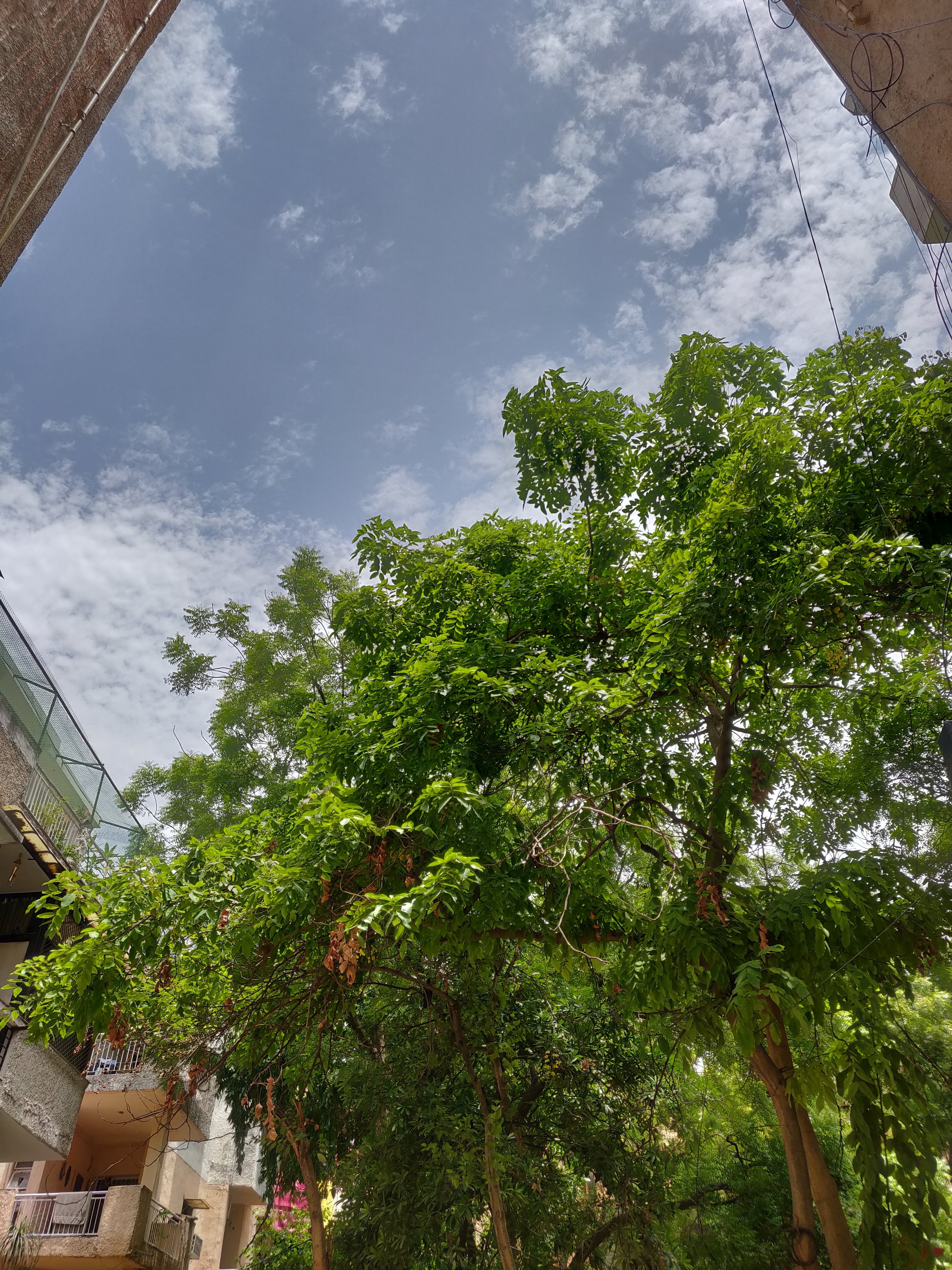
The Amaltas thus became, only about a year ago, the first tree I added – after multiple years – to the mental repository of those I could identify from afar. This, as anyone will invariably point out, is no achievement: the Amaltas too, like the Neem, has a very distinctive appearance.
This is true, but only partly. The Amaltas' yellow fever is limited to the summer; for the rest of the year it bears a completely ordinary appearance. The only giveaway then, as has been recently discovered, is to look for the fruit: either hanging on from the tree itself, or spread across on the patch of land beside the observer. Long, black tubes that do not befit the label of a fruit in typical imagination, but are highly regarded in traditional Indian medicine.
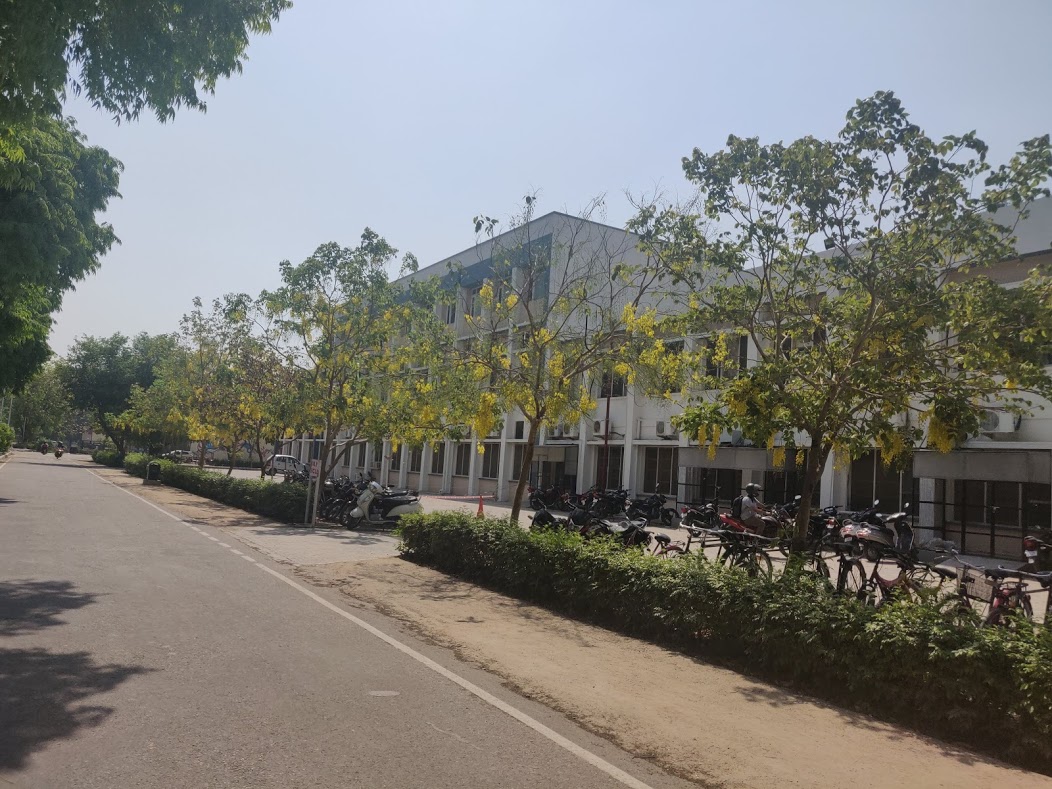
During the early part of this year, this character trait of the Amaltas helped the identification of a number of them in Patiala. A resplendent college campus during early April, thus, did not offer surprise; as to why I was never able to spot them earlier in my three years in college, I have scant response. Perhaps the eyes only see what the mind is primed to see: a point of view that is obstructed by a mind determined to look outside, crippled by the fear of missing out, remains unable to see what is available in plain sight.
An alternative explanation is that the Amaltas only began to register in memory when an association between the tree and Delhi was firmly placed in my mind. When the golden yellow became a symbol of the city, it began to stand out – even in places I was not expecting to see it.
Among the places I have always expected to find it are the romantic avenues of New Delhi - Amrita Shergill Marg, and others such. Among the places I did not, was the park located behind the building I live in.
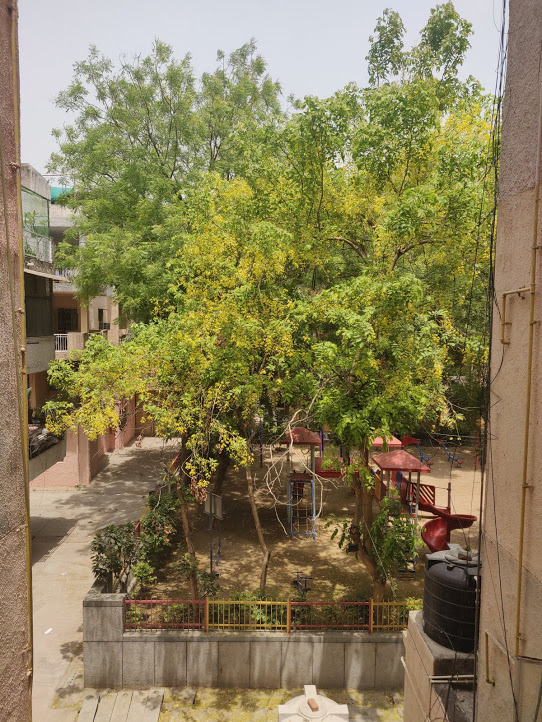
A couple of months ago, facing the second-floor entrance to our house, whilst waiting for someone to answer the doorbell, a sight of the now-familiar golden yellow was chanced upon in the park. In an instant, it became clear that the tree is not the exclusive reserve of the more central parts of the city; as time has passed, I have now realised that it has an absolutely egalitarian presence across the expanse of our capital; it does not see class, and even borders: there are streets lined with it in both Noida and Gurgaon.
Curiously, the Amaltas jostles for space in that park with a Neem, and for attention amongst multiple event venues at India Habitat Centre, each named after a species of tree indigenous to the country. In terms of public adulation, however, there is no contest: although I could not find official records being able to confirm this assertion, it is often regarded as Delhi's 'state tree.' It is a regular feature on most of the city's chroniclers' dispatches about the city; as well as a constant-starrer on multiple Instagram accounts documenting the trees of this city, the apparent chief amongst which is @delhitrees.
Within this context, then, there has been a remarkable evolution of my relationship with the trees of the city, and more specifically, the Amaltas: from juvenile indifference, to a love for the green aesthetic of an urban space, to a feeling of a deeply intrinsic connection – one that felt truly valid when the gradual extension of the Amaltas behind the house reached into our balcony; within touching distance of my outstretched hand. In being able to touch it, there was special meaning: entirely imagined, and yet, perfectly real.
In some sense, in that moment, it felt as if a sanction had been granted: to associate a sense of belonging, of home, with a chance sighting of the golden chandelier. Of being able to treat the tree as more than mere public ornamentation; instead as a complex teleportation device.
Within the Amaltas, thus, now vests the ability to take me home – if only to derive momentary comfort – from wherever I manage to spot it.
How remarkably peculiar then, given the very tangible service it provides to all of humankind, that it is this imagined benefit that I feel completely indebted to it for.