
The security manager at the India Habitat Centre flat out refused any pleas I made to be allowed entry to the Stein Auditorium. It was 6:45PM; I was fifteen minutes late to the screening of Perfect Days at the Habitat International Film Festival.
I am not frequently late to places (although some friends will disagree); at the same time, I am also not frequently early. I try to be as on time as can be. The operating principle is to try and retain agency over my time. In chief opposition to this way of life is the school of thought which believes that one must always account for unforeseen circumstances.
The culprit in this instance was indeed an unforeseen circumstance: the Prime Minister of India had conducted a rally only hours ago at the Jawahar Lal Nehru Stadium, right next to the venue of the screening. Thousands of street vendors had arrived to chance a sight at the man, and a few of them received state sanctioned loans as part of a government program to empower these micro entrepreneurs. Steady streams of them trickled into buses as the program ended, and streets remained “red” for hours afterwards.
This excuse landed on deaf ears. Others like me – complete with pre-registration QR codes – were being turned away for being late regardless of how far they had come from. I was, to be completely honest, in a state of shock: screenings of foreign language films at the same venue I’d attended before had played to crowds the size of which could only be called disappointing. Here I was, being turned away from a German-directed Japanese language film about a janitor in Tokyo - for being fifteen minutes late.
In hindsight, this was perhaps a mixed consequence of an explosion of interest in Japan in the young people of the world, and the film’s Oscar win only days before the screening. Perhaps even the Oscar win was a consequence of the former? Reports of over-tourism from parts of the country filled the internet last year as it opened up again after heavy Covid restrictions for three years. I could personally verify the phenomenon when I discovered three friends independently planning – or having been on – trips to Japan at around the same time as I was, in November of 2023.
This was to be my family’s first trip together outside the country; the first-ever exercise of her passport by my mother, and the first trip together post the expansion of one family into two in February of 2023, courtesy my sister’s wedding. The trip was thus a big event, which required big planning. After devouring many hours’ worth of obscure blogs and scouring many hours’ worth of Instagram Reels, we had a considerable idea of what we wanted to do, and when.
Not everything went to plan, of course - but if I could have chosen only one thing to go according to design, it would have been seeing Mt. Fuji – Fuji san – at least once on our trip, purely for the cocktail of relief and happiness hormones that doing a "must do" task on a trip releases. When we managed that thanks to an early morning trip to Hakone from Shinjuku on the last day of our ten-day trip, it felt like the perfect closure to ten perfect days.
Outside the hall, I continued to wait; reading the film’s plot while the clock ran on. A simultaneous expression of my hope for a miracle, and my defiance of an unjust instruction to leave. This civil disobedience appeared to be reaching an impasse, only to be ended by a moment of surprising empathy: the security guard signalled me in, and marshalled me to one empty seat under the torchlight of his smartphone.
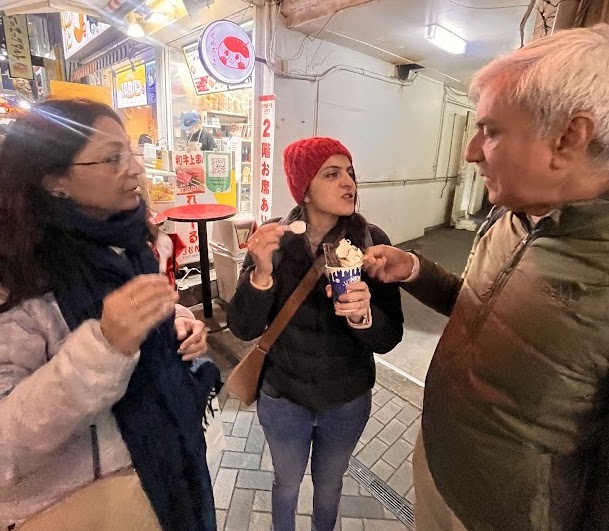
I had no option but to immediately immerse myself into the context of the Tokyo being shown on screen; in that, I was aided by my visit a few months earlier. I would have imagined up a connection even if I had not been to Tokyo, but the visceral authenticity I felt seeing that film was, as I realised in that moment, my greatest souvenir from the trip in November.
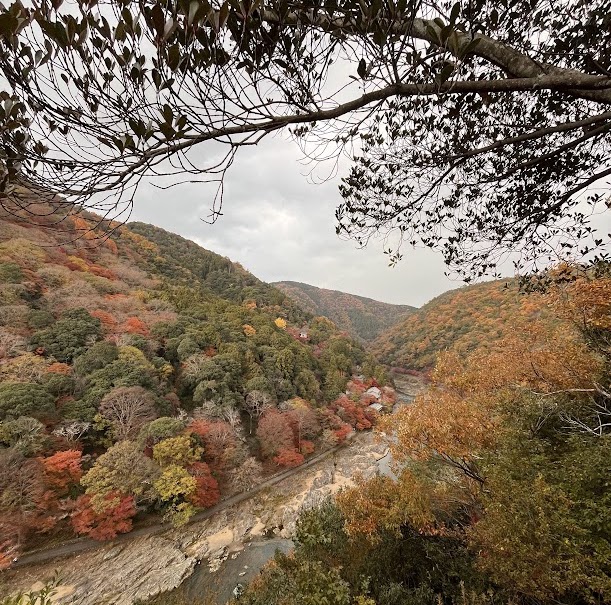
The localities, the train lines, the culture of disorienting politeness and order, even the exact temples and parks: I could trace them all to points in memory. Traversing through the country truly was the most other-worldly experience I’ve had in my life; at the same time, there remained, like the hum of an electric transmission wire on a winter’s night, a persistent undertone of deep connection.
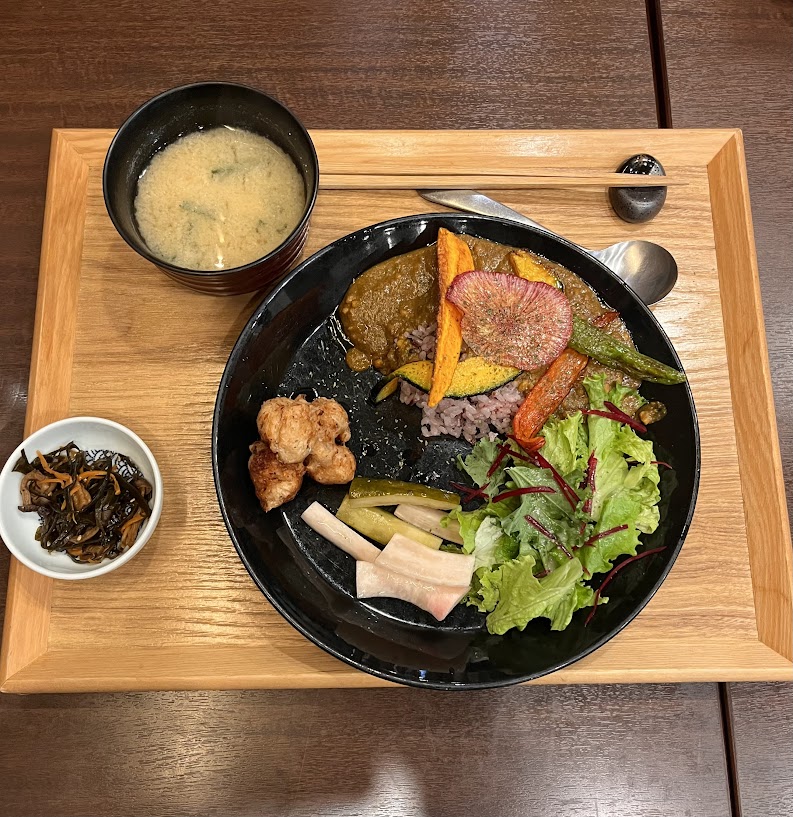
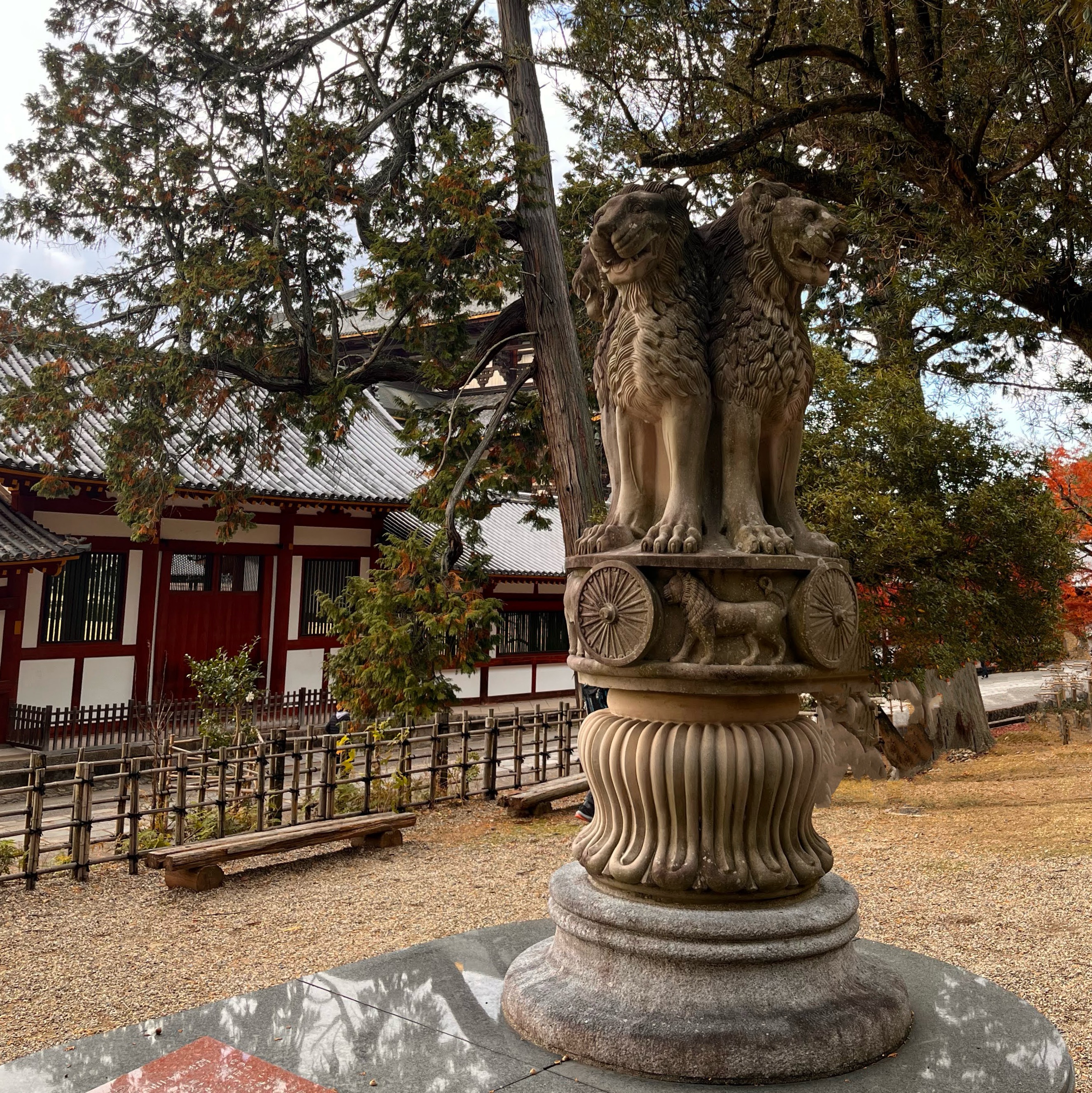
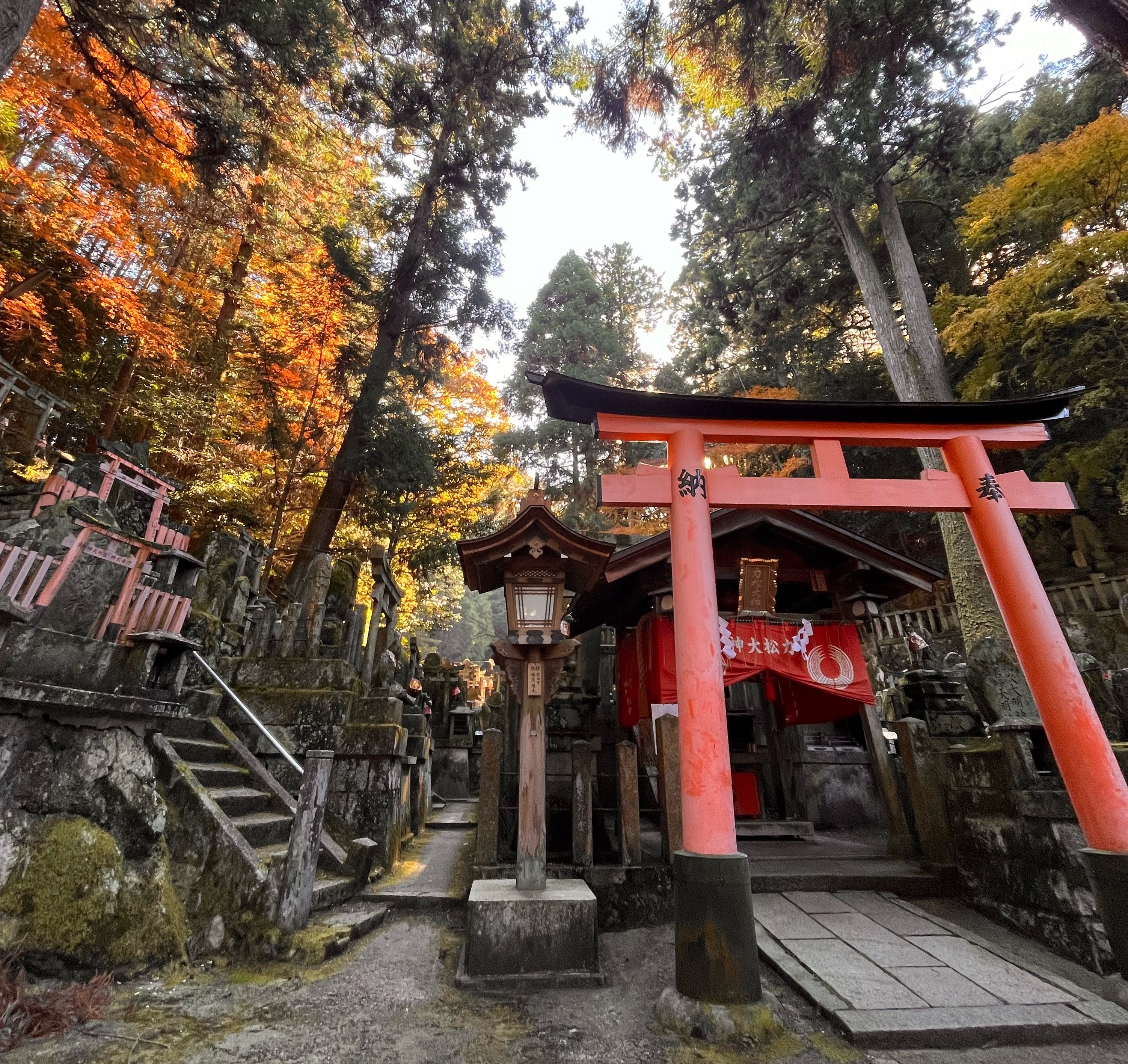
I can imagine three reasons for this: first, the omnipresent instances of shared culture: traditional Buddhist vegetarian cuisine called Shojin; Shinto temples with their animistic tradition, and not least a life-sized statue of the central motif of the Indian state being present outside a park in Nara we decided to walk to on a whim:
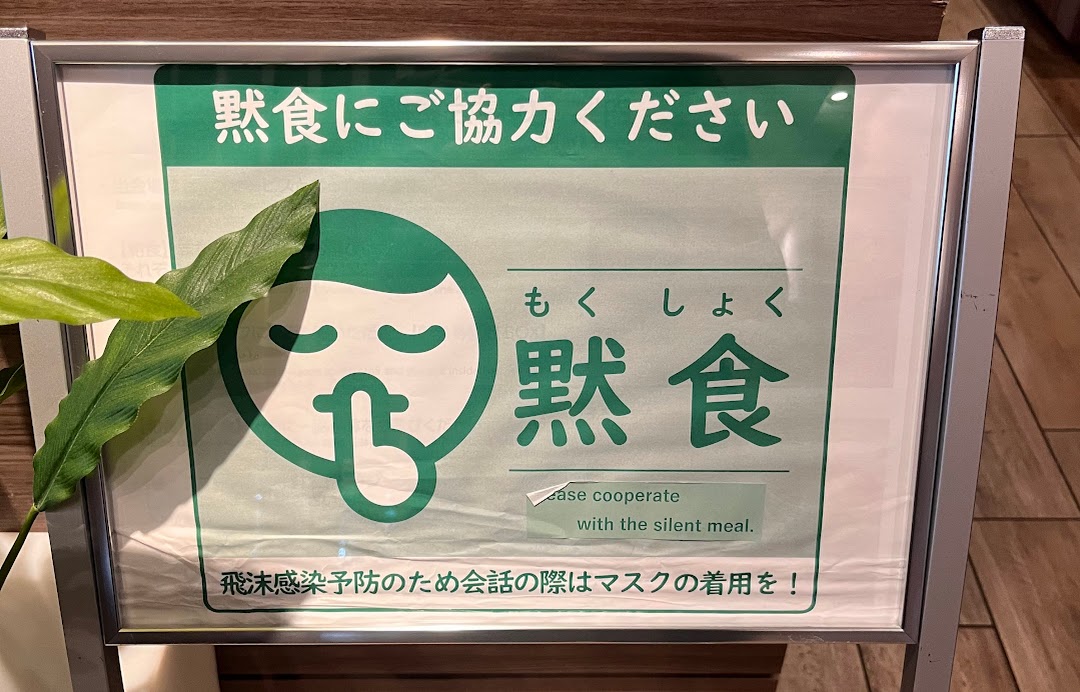
Second, an astonishing sense of respect for public order: talking softly – or not at all – in public; carrying all trash with oneself; taking up only as much space as that which leaves enough for the other. I do not know if it is an effect of spending an entire life in a society with as stark an absence of these values as there can be, but to me, this respect for public order inspires the deepest respect and attachment to any society which practises them. In that, Japan exceeds all others.

Third, and perhaps the most important: trains. Funny and anti-climatic as it might be, my fascination with trains has created an affection for the Japanese that is unmatched. They are the masters in the world at building them, and have given us Indians rail technology and institutions that have been – and will be – truly, massively transformative: the metro, and the high-speed rail.
As is habit, an attempt to intellectualise this fascination for the train led me to finding in a train the greatest demonstration of an empathetic and equitable society. It is visible in a six year old child being able to return to her home near Osaka from school near Kyoto and a grandma bridging the same distance to see her grandson – both by themselves. It is visible when two men are able to walk to the station supervisor at Nishishinjuku, guided by sticks instead of eyes, after getting off the last train at 1 in the night.
The train, their frequency, their timings, the stations, their cleanliness, their facilities, the staff, their politeness, their professionalism, the passengers, their order, their discipline: a consistent idiom of reliability that affords everyone – everyone –a fundamental right to a mobile existence. All other benefits – to work, to seek, to explore, to enjoy - then automatically manifest.
In that context, is it surprising that a spiritually inclined Japanese man wanders over to Tamil Nadu twice a year to find culinary gems from the South of India and transport them over to his patrons in Kyoto? In a land where the ability to go anywhere, anytime, for cheap is a fundamental assumption that requires hardly any thought and little effort, the impulse to discover requires little suppression.
Dai Okonogi’s labour of love has now received enough attention from Indian travellers to Kyoto to make it so that his two quaint stores are almost always out of reservation spots. His loving customers are, however, majorly tourists at the moment. The local population is yet to take to eating a large thali of rice and colourful sambhar, pachadi, aviyal and the like - with their hands. They are not disrespectful, only cautious: the country and its culture is a monolith that does not move very easily. They are slow to adapt, and slow to adopt.
“Why don’t you try and move there?” I was asked by a few people when I returned with reviews more glowing than the Sun on the first day of June. While I do not have a perfectly-formed reply to that question, my instinct told me that Japan is extremely unlike most other countries: I doubt that immigrants there are able to happily live a hyphenated existence. To be adopted, a complete secession of former culture seemed probably necessary. A happy realisation – which contributes to why my answer to this question remains unfinished – is that the former culture in my case is far more proximate to the Japanese than I imagined it to be.
There are signs, of course, that the monolith is itself on the move: there were hip vegan Japanese restaurants popping up across cities, catering to both the young, globally mobile locals and new-wave migrants helping the country evade a critical labour shortage. Economics it seems, to morph an adage famous in the world of technology, eats culture for breakfast, lunch and dinner. Ain Soph, 2foods, OKO: all offspring of the pursuit of the pursuit of the tourist’s dollar - we were not complaining.

A similar question seems to be at the heart of Perfect Days: is a pursuit for more universal to everyone? What is life like for those of us who find wealth in contentment; in the mundane routine of work done well? A complex theme which the film handled, in my view, very beautifully.
A peculiar handicap I’ve come to discover in myself is that I must watch a film at least twice to truly appreciate it. The first iteration is completely consumed by my meaning-making machine shooting off thought-threads in every direction, at every instant. It is only in the second viewing that I am calmer, and more focussed on just watching, rather than trying to interpret.
This pattern of reactive versus active consumption extends to almost every sensory experience in my life, which is why I am able to understand cities, people and circumstances far better on second exposure. It will probably be true about Japan as well: a second trip beckons next month, and I promise to come back and report the result. Given the experience I now have, there should be more circumstances that are foreseen than not. However, I'm not worried: if there is a place which handles unforeseen circumstances for you, it is Japan.
P.S.: A side quest is making sure I bring back a model Shinkansen and not a piece of its track instead, but I reserve that story for a future update. Till then, these remain – and I suspect they will always be – Perfect Days.