
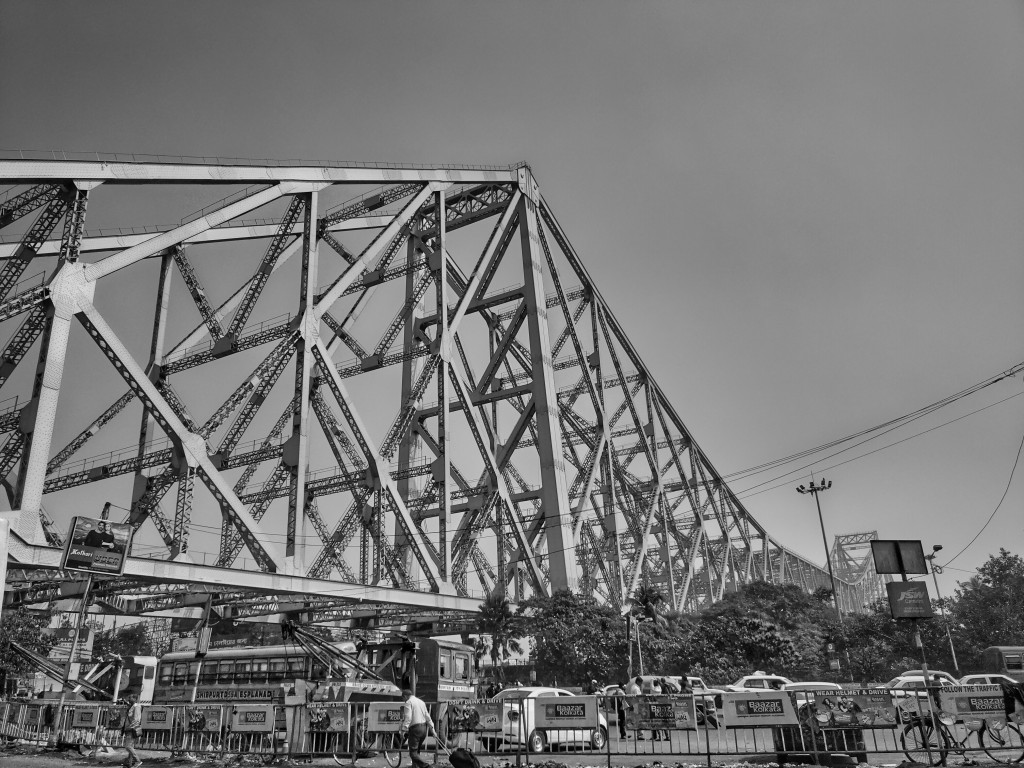
Old yet grand and iconic. In all my travels to the city, I have taken the train and arrived at I have always taken the train to come to Howrah. As I come out of the grand station, the first thing I do is turn towards the left and take a look at the thing which has come to represent the city ever since it was built. Grand. Impeccable. Unlike any other. The Howrah Bridge. This structure has become the motif of Calcutta and although there is a new bridge just down the south, it pales in comparison to the magnificence of the old. My earliest memory of this city has been the Howrah Bridge like countless others. It exudes a timeless appeal. Again, just like the city to which it connects. Calcutta always gives me the old-world charm. It seems to have made a cocoon for itself and stayed there in limbo, refusing to let go of the past, a habit which has earned the chagrin of many. The past was powerful, alluring, grand before the baton was passed to the new city to the north of India. While Mumbai has a Navi Mumbai and Delhi, a New Delhi, Calcutta doesn’t seem to have anything. It is making the change within itself.
Calcutta is a city of unique contrasts and juxtapositions. The taxis are still the old yellow Ambassadors with a cranky suspension and almost always having a Bihari driver. Many streets still bear the name of its imperial masters. The Flurys, Mocambos and the Peter Cats still find its clientele amidst the Taj Bengals, Sonar Banglas and Novotels. This city feels old, grand, vibrant when one travels towards the innards of the city while taking in the history of the architectures while passing by the Esplanade Mansion, the now-empty Writer’s Building, through the vast expanse and greenery of the Maidan, and by the imposing Fort William. As I move further south, the journey becomes somewhat less pleasurable. Closely built, cheap houses, the haphazard network of small roads connecting to the main thoroughfare, high rising apartments coming up on any available parcel, the yet to be completed grey metro columns jutting out from the middle of the road, the dingy alleyways from where a fetid smell arises. I roll up the window of the taxi if it is still functional and check the time remaining to reach my destination. Calcutta may have become Kolkata but it has not yet attained a new self.
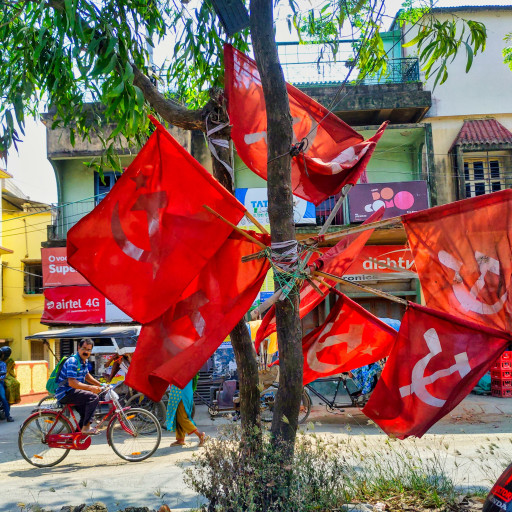
This city has been a centre of intense politics for more than a century aided by the social Renaissance of Bengal in the mid-19th century. What was once a beacon for the rest of India, slowly came to be despised. While the political overlords of Bengal have changed, some ideologies propagated over the 3 decades of rule by the Communists still remain. This is the only city perhaps apart from those in Kerala where the flags bearing the hammer and sickle can still be seen fluttering from the nondescript small tea stall or on a tree long after people have rejected them. Its colleges are still places of fierce debates and politics and it is here where the ideology thrives even though it has been accepted that the 3 decades of misrule demoted Bengal and brought one of the greatest cities to its shadows. But the rallies continue unfazed.
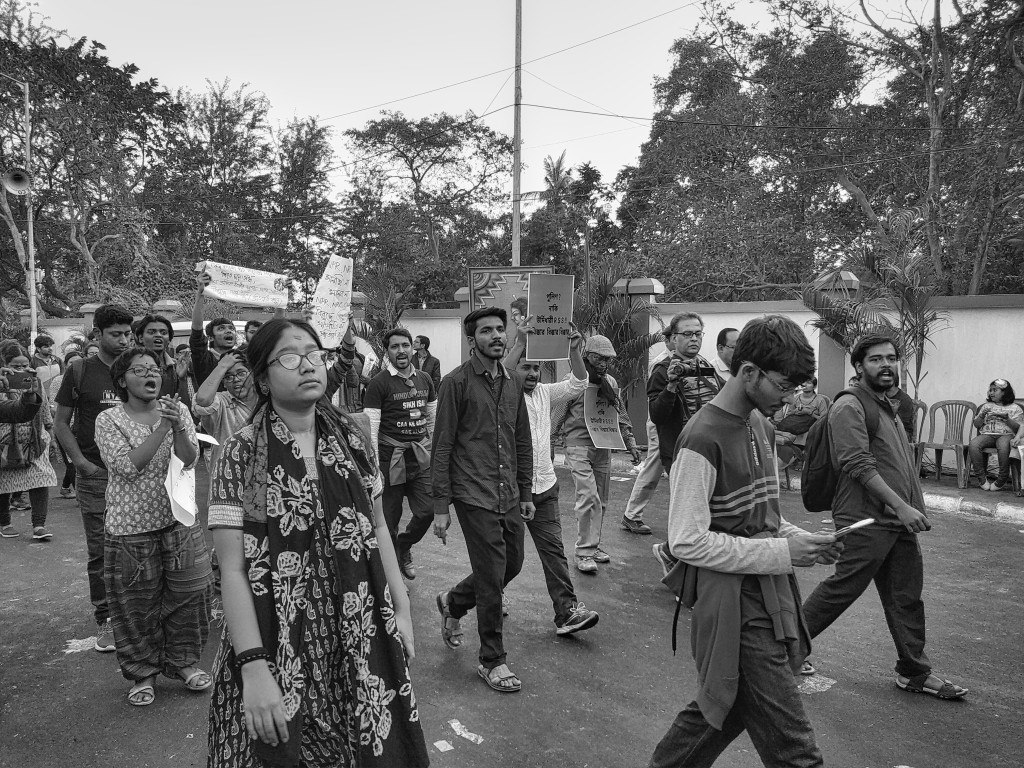
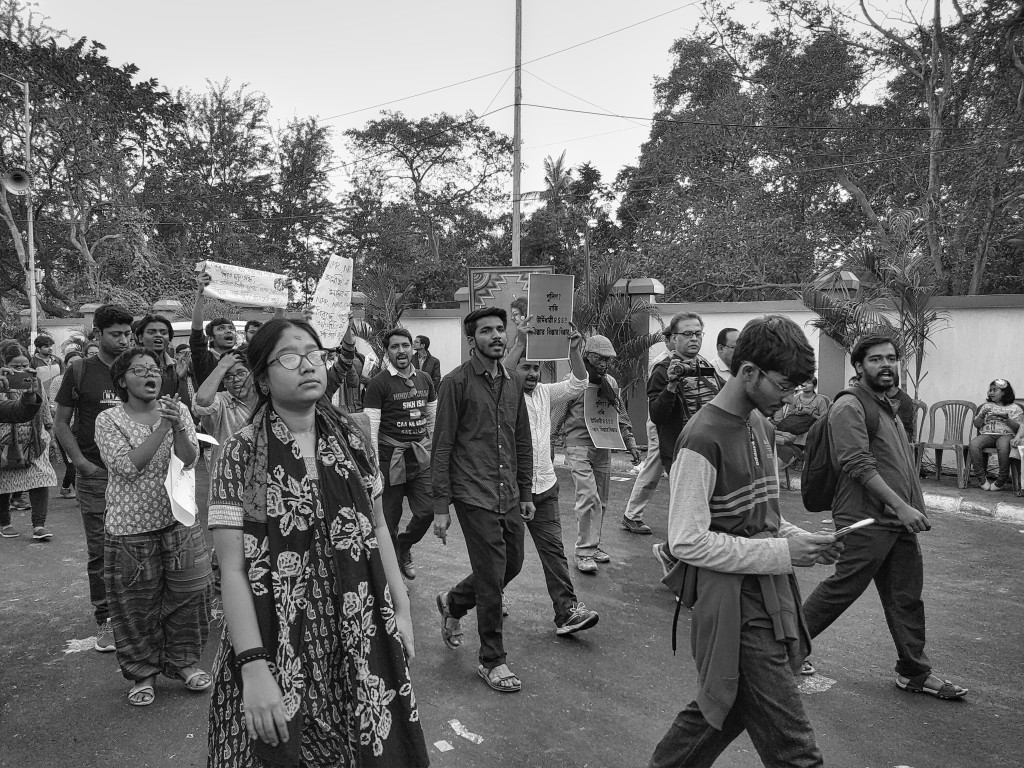
I was present at the Kolkata Book Fair this year and here suddenly a crowd gathered, placards in hand, handmade posters were drawn and a rally began protesting against a new law by the Government of India. The people didn’t seem to mind, the administration didn’t care. What is interesting is that the crowd consisted of the young students with bags still from the colleges and the white-haired gents in kurtas and black sandals who seemed to relive their younger days when they would be out in the streets doing exactly the same thing. On one side the protest continued and on the other people were standing in a line to enter a bookshop inside the fair. De’s Publication has the best and most affordable books I was told. Two elderly men in the queue, their hands full of bags containing books rued the rise of paperbacks. “They don’t last long enough and still these publishers keep on bringing them.” Only in Calcutta. Tired from walking over 3 hours, resting under the shade of a tree, I was approached by a young girl, pointing towards the Penguin bag in my hand she asked where is that stall located. Only in Calcutta.
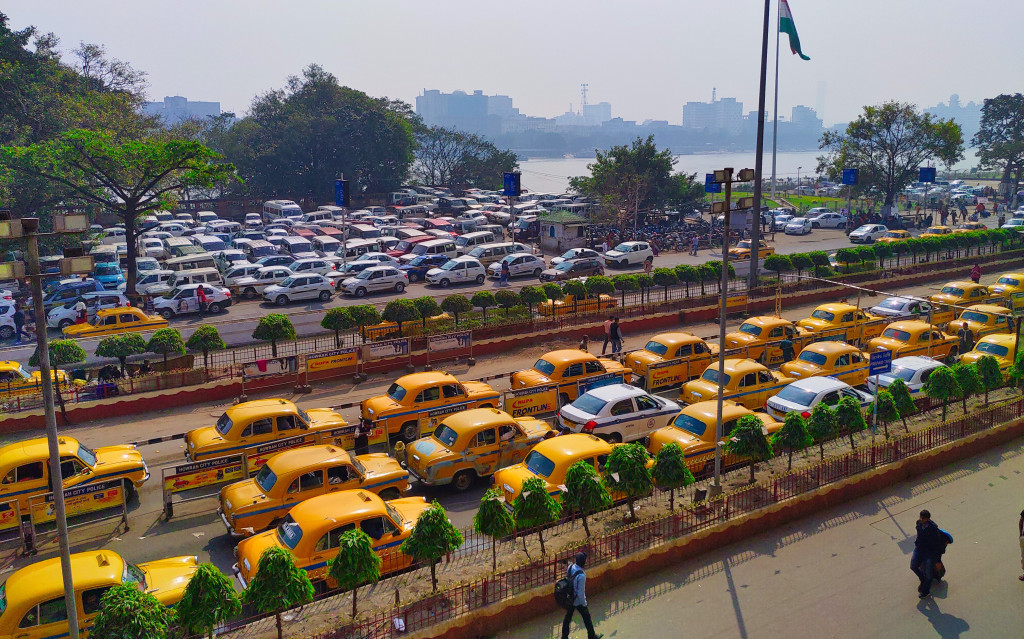
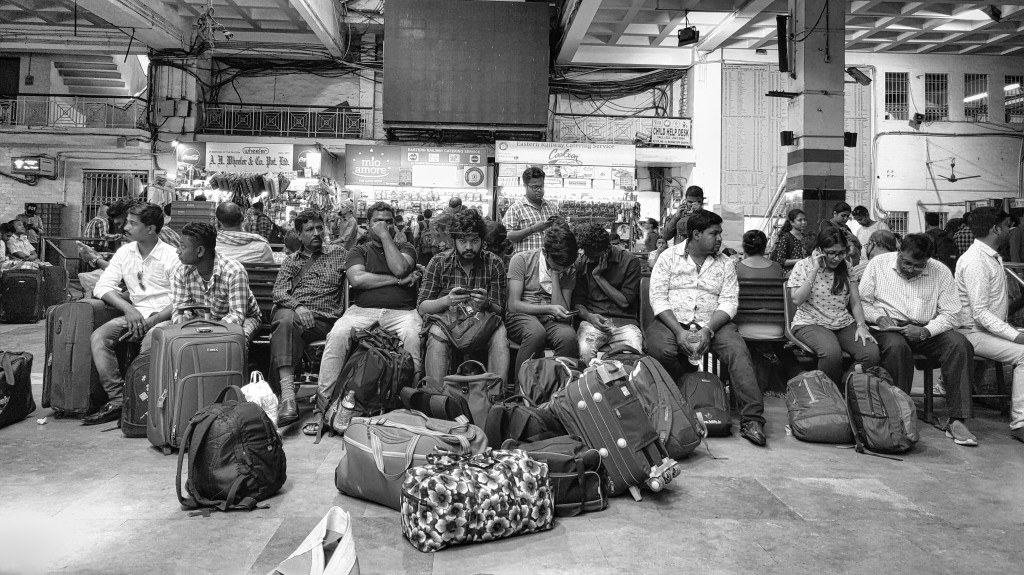
Making my way back to Jamshedpur, I was a few hours early at Howrah Station. Whenever I am at a waiting hall, I try to observe my fellow co-passengers. This is the week before the lock down. People are seen with masks. Some are snoring. Others listening to the announcements. A girl is spraying sanitizer on her palms before opening the pack of chips, another is talking on the phone quite audible to be heard. She missed the connecting local. The next one is 2 hours later. The dejection could be felt in her voice. A father beside me, instructing his daughter to buy an India Today and an Ananda Bazaar Patrika at the Wheeler shop. A group huddling together near the switchboard to charge their mobiles, the devices resting in a precarious position on the edge. A call came, the device vibrated, its owner a little late in reaching. The phones tumbled down. An altercation ensued. I find the waiting room much fascinating. A station like Howrah ensures that there is never a dull moment when you are waiting. You sit, you observe and you become an audience in this theatre, while you yourself are someone else’s actor unknowingly.
The writer is an electrical engineer, a resident of Jamshedpur, a lover of Calcutta and an ardent railfan. Originally published, as part of his other musings, in his own blog.