
Allegations of elitism are easy to stick to the best parts of a city. Nowhere is this more true than the metropolises of India, where the remnants of the racial differences instituted by the British linger on, thinly disguised as class differences.
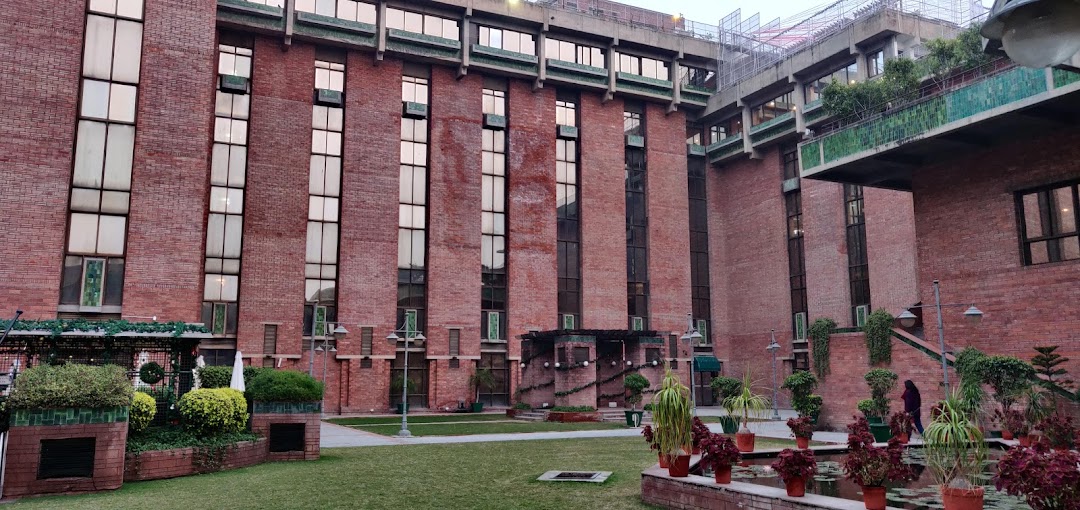
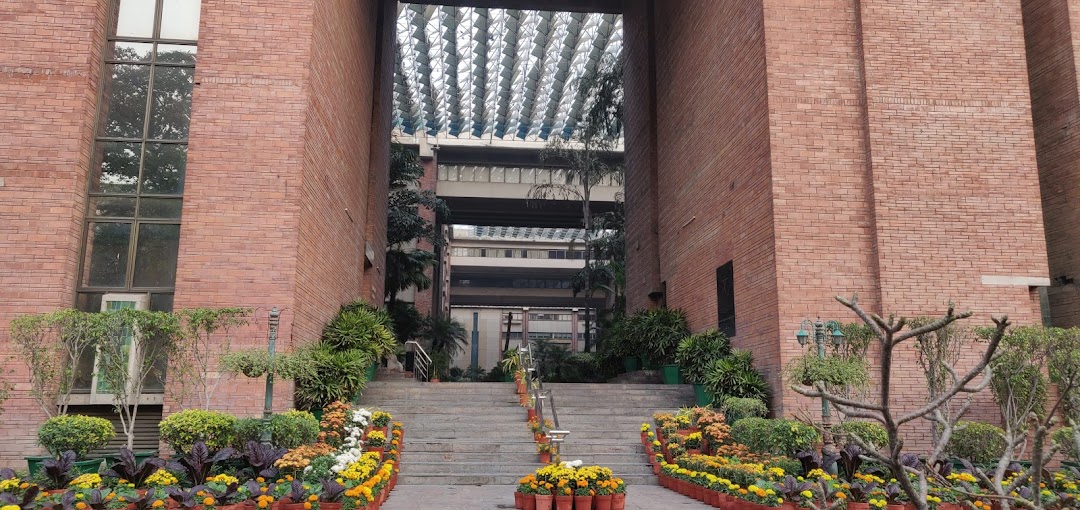
In that context, the India Habitat Centre is an interesting contradiction. On the leafy Lodhi Road – a stone’s throw away from the Nizamuddin Basti – picture a towering complex of red brick, with sprawling courtyards that mimic an urban jungle. There is no grid, and the topology is surprisingly undulating: a combination of basements, elevations, amphitheatres and lawns that all seamlessly blend together.
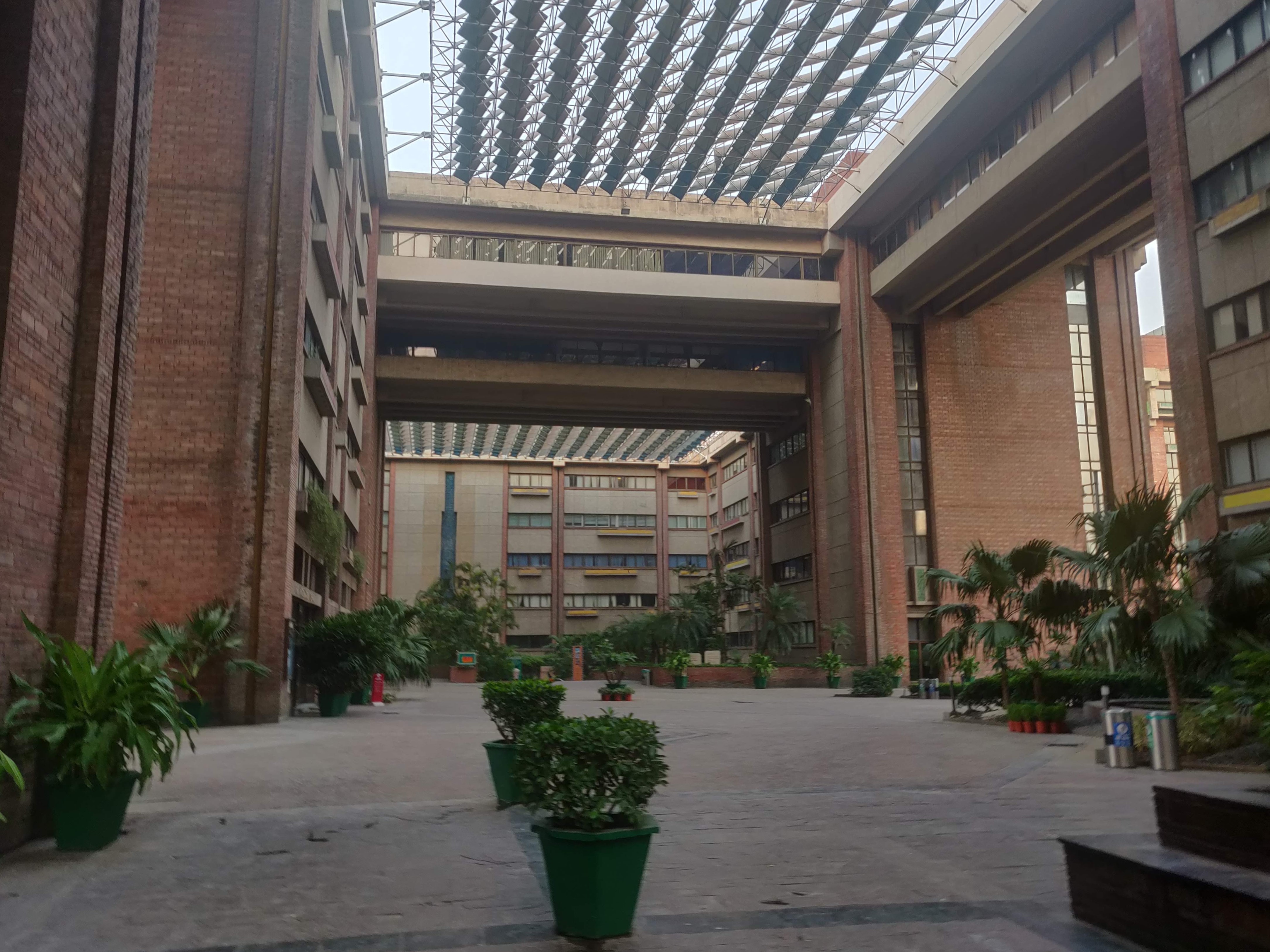
It is a joyfully intriguing space: there are many office buildings and even a few hotel rooms, but it took me many years of being a casual visitor to realise that these exist. The architecture is masterfully employed to hide them.
The love affair with the building complex can unravel a bit when confronted with this information; the fact that there is a large part of the complex accessible only to “members” – elite government servants and others – threatens to transform this public space into an oppressive symbol of elite gatekeeping.
However, for one reason or the other, the Habitat Centre evades all such characterisation. It remains, in popular — and personal — imagination, truly public.
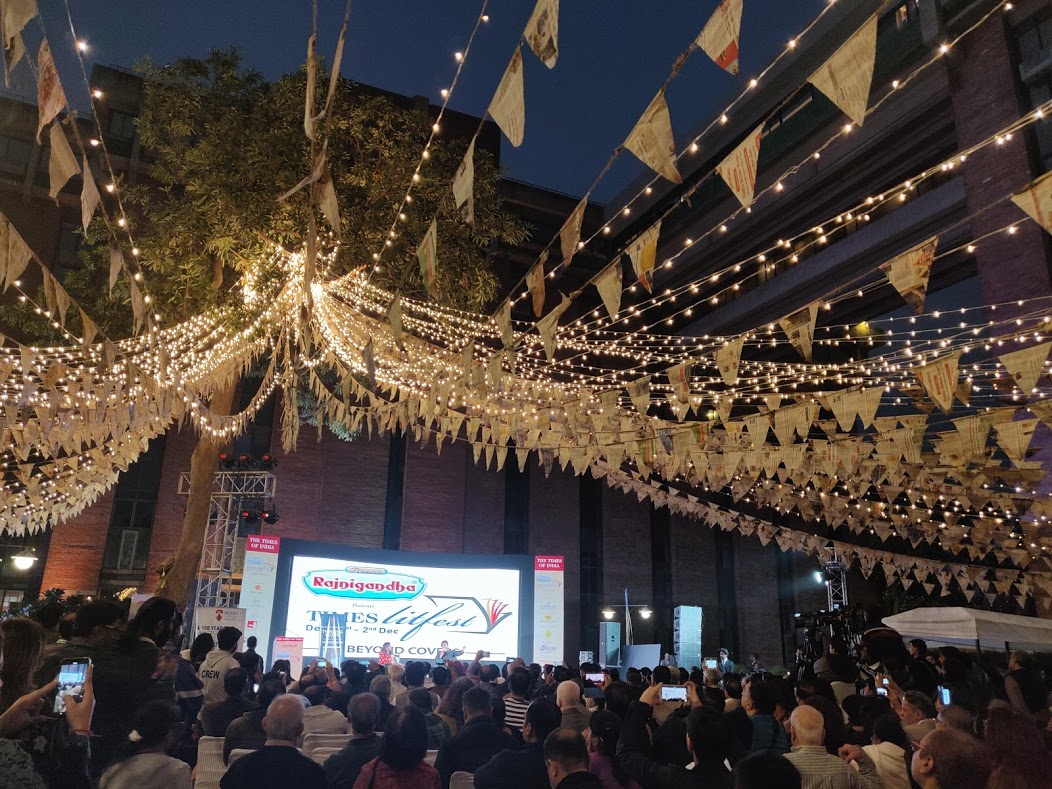
I do not remember what age I was when I first came across the Centre; I was travelling to attend an event at one of the auditoria (a family member was performing), but the visual of the complex appearing in the car window remains inscribed in my memory to this day. I was, in equal parts, shocked and awed. The scale was unimaginable.
I am a staunch believer in architecture as the strongest lever of societal transformation: it has a distinctive ability to create such unimaginable realities, an ability which, in turn, can positively affect the lives of individuals in myriad ways.
The Habitat Centre is perhaps the perfect example of this phenomenon: To the child looking on from the car window, the idea that this massive structure could be associated with, as opposed to merely gazed upon, provided the priceless opportunity to expand his sense of self, and to include the city he lived in within it.
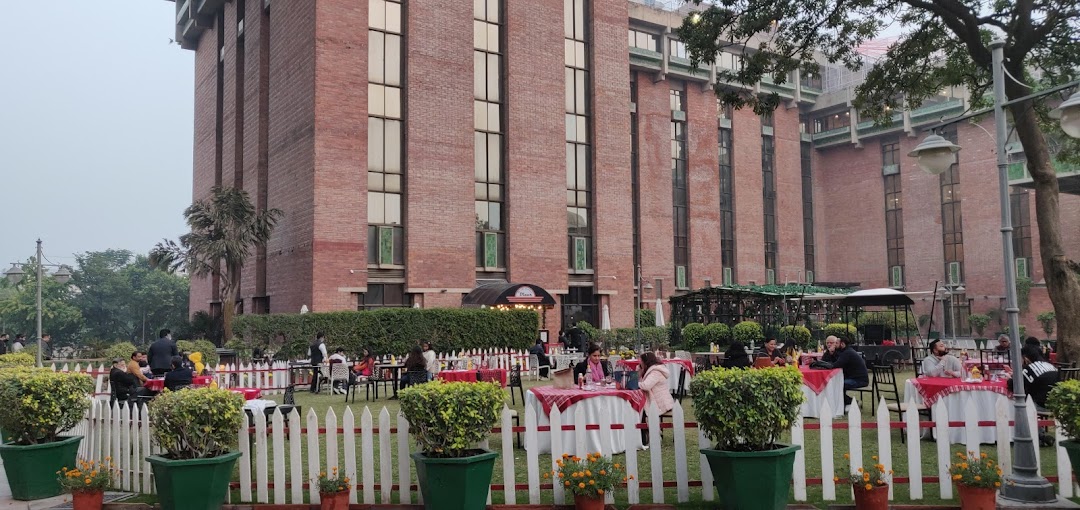
Strangely, the Habitat Centre was born not with the requirements of the city in mind. The structure was a joint proposal of multiple organisations that required office space in that area, foremost amongst them being HUDCO and TERI. They resolved that they would manage the institution through a governing council comprising representatives of every organisation, and decided that the Centre must earn revenue if it were to be sustainable. Thus, a pleasant public space with restaurants and hotel rooms was envisaged, and Professional management services were employed. It was an institution that was built to last.
I would always wonder why all the great institution builders I would read about – amongst them, Joseph Stein, the architect behind the Habitat Centre – were all from decades past. Where were the modern Indian greats? Where were the individuals building inspiring institutions of the present, and the future?
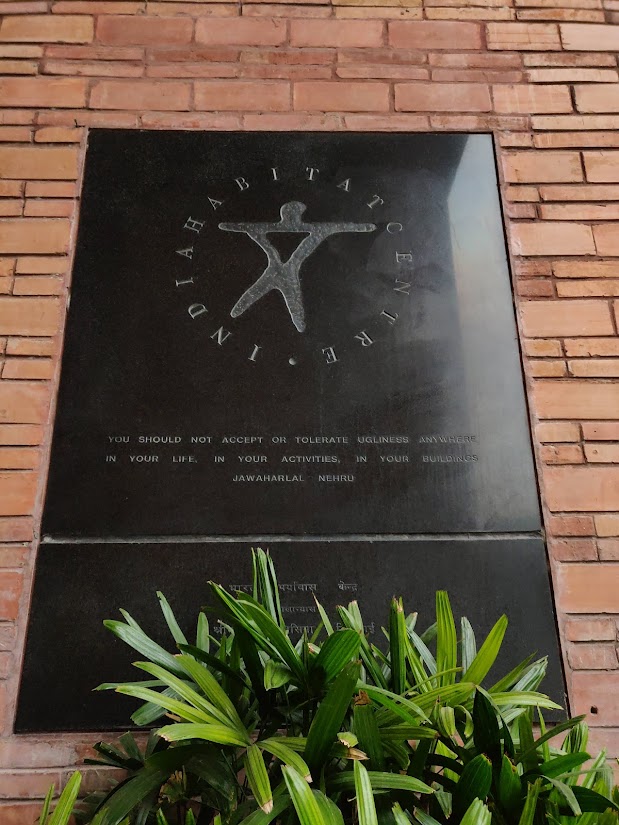
The Habitat Centre has an interesting plaque at its western entrance, almost obscured by a large potted plant: It quotes Jawaharlal Nehru as having said “You should not tolerate ugliness anywhere in your life, in your activities, in your buildings”. Where were the carriers of this sense of aesthetic in modern India?
A curious, well-shrouded cousin of the Centre lives less than a kilometre away on the other side of the Lodhi Road. While it is also designed by Stein – the square kilometre containing both the buildings is often referred to as “Steinabad” in architectural dissertations – that is perhaps where the similarities end. The allegations of elitism which have evaded the Habitat Centre stick, perhaps rightly, to the India International Centre. This centre proudly declares that the “residential and dining facilities are open to members and their guests” and I have never attempted to inquire how one can become a member, although I imagine it would not be a trivial pursuit. I have been inside only once - to attend a talk which was, surprisingly, open to all; yet, despite the venue, it was remarkably useless.
It is in this background, perhaps, that the public character of the Habitat Centre shines even stronger. To imagine the libraries and auditoria of the International Centre existing in a vacuum – with the “masses” being given only the vast lawns of the Lodhi Gardens to satisfy themselves with – is a tragic alternative reality that the Habitat Centre shields us from. The greatest power of the centre is in its ability to continually expand this definition of “us”: each year, new people come to visit it for the first time – University students, newly-employed graduates – and each year, they return with the Centre comfortably folded within their idea of themselves. The Habitat Centre becomes theirs to own, and a connection with the city is born. To my mind, no parallel exists anywhere in India; an attempt to create one is perhaps, now, being made.

The Central Vista project has surprisingly similar antecedents to the Habitat Centre: a group of organisations require greater office space in Delhi; they are being given an integrated structure with multiple large buildings located amidst public space. In multiple interviews of Bimal Patel, the architect behind the project, I see a glimmer of the aesthetic and philosophy articulated by the erstwhile Indian greats.
He mentions how the North and South Block – offices of the most important departments of the Government of India – were designed by the British as instruments of colonisation. The greatest evidence of this is present within the structure itself: an inscription above the entrance of the North Block which says “Liberty will not descend to a people; people must raise themselves to liberty." While having been appropriated by the people in their own right – famous images of thousands of Indians on the steps during Mahatma Gandhi’s funeral come to mind – the structures remain buildings that a child can gaze upon. Patel says that they must be structures that a child of the future can walk upon, and associate with. I cannot agree more.
Although a citation of the work he has already commissioned would ordinarily propel him into the list of Indian architectural legends, Bimal Patel’s legacy is, now, entirely contingent on the execution and reception of the re-imagination of Delhi’s central axis that he has been charged with. A true test will be if, decades hence, the unimaginable reality he has articulated receives tributes by another resident of the city, perhaps yet unborn. Till then, we will celebrate the habitat that we have.