
My side quest for the summer was watching football. Before I'd even started my internship in Nice, France, I began looking for tickets to matches that any of the big European teams was playing in. Buying tickets from official club websites was a challenge, because by the time the “guest” window opens after they’re done selling tickets to members, a lot of the good, affordable seats in the stadium are gone. For me, living across the Atlantic at the time, this also meant waking up at odd hours and navigating websites clogged with traffic they were clearly not meant to handle; with text written in languages that I could barely understand.
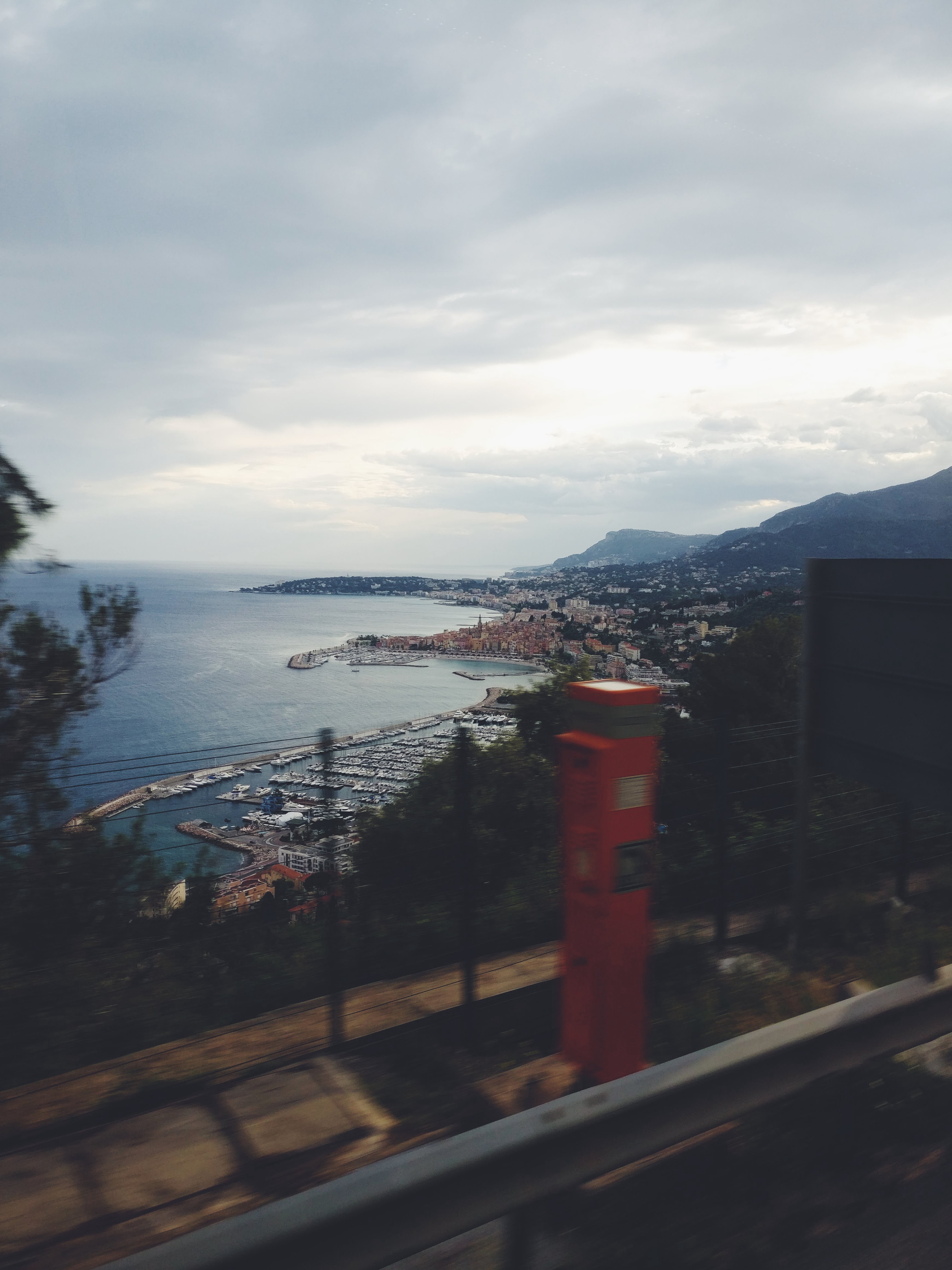
My first successful ticket acquisition took me to Turin, situated at the foot of the Italian Alps, and home to Juventus, Italy’s most successful football club. It was my first week in Nice, and instead of using the weekend to set up my apartment for the summer, I was taking a bus to another country. The bus ride was magnificent, across hilly roads and facing the French Riviera. We crossed the Italian border at Ventimigilia, where border officials who spoke fluent English checked my passport. After a brief halt, we were off again, on hilly roads now overlooking the Italian coast. These coastal towns had many similar features: a dock with a lot of white boats, and a couple of football cages and fields hidden between neighbourhoods of pastel-colored houses.
The day before this, in my hipster pursuit of a French SIM card, I overlooked Orange (familiar to me as the shirt sponsor of Olympique Marseille), and chose Buoyguess Telecom. My interaction in the phone shop was primarily in actions and google translate enabled French, but I did make sure to ask her if the SIM works outside of France. After crossing Ventimigilia, I got a message from Buoyguess welcoming me to Italy, but my internet connection disappeared. All of this wouldn’t matter because the bus was supposed to have WiFi, but that wasn’t working either. As the daylight started to fade, there wasn’t much to look outside, and with no data, my jet-lag kicked in.
I woke up to the bus stopping and changing drivers. I looked outside and saw a road sign saying “Andorra”. I was very confused but I was confident the bus couldn’t have travelled so far west into Spain in such a short time. Without data I couldn’t even check Google Maps. Finally, the bus reached Savona, which I recognized as a stop in the actual itinerary. I later found out that the place where the bus changed drivers was actually Andora, a coastal town not too far from Savona, and I just simply misread the sign in the poor light. Even at the bus station in Savona, I tried to leech WiFi from the other parked buses, but was ultimately unsuccessful.
About 1.5 hours later, we reached Turin. It was around 11 PM so a lot of stores were still open, but the town didn’t seem too lively and seemed somewhat deserted. I tried multiple times to get some kind of WiFi when we stopped at traffic signals, but the halts were too short to connect to any kind of public WiFi. Since I couldn’t contact my friend who flew in earlier in the day, he was, justifiably, concerned and irritated in equal measure: I had virtually gone off the grid about half an hour into my bus journey.
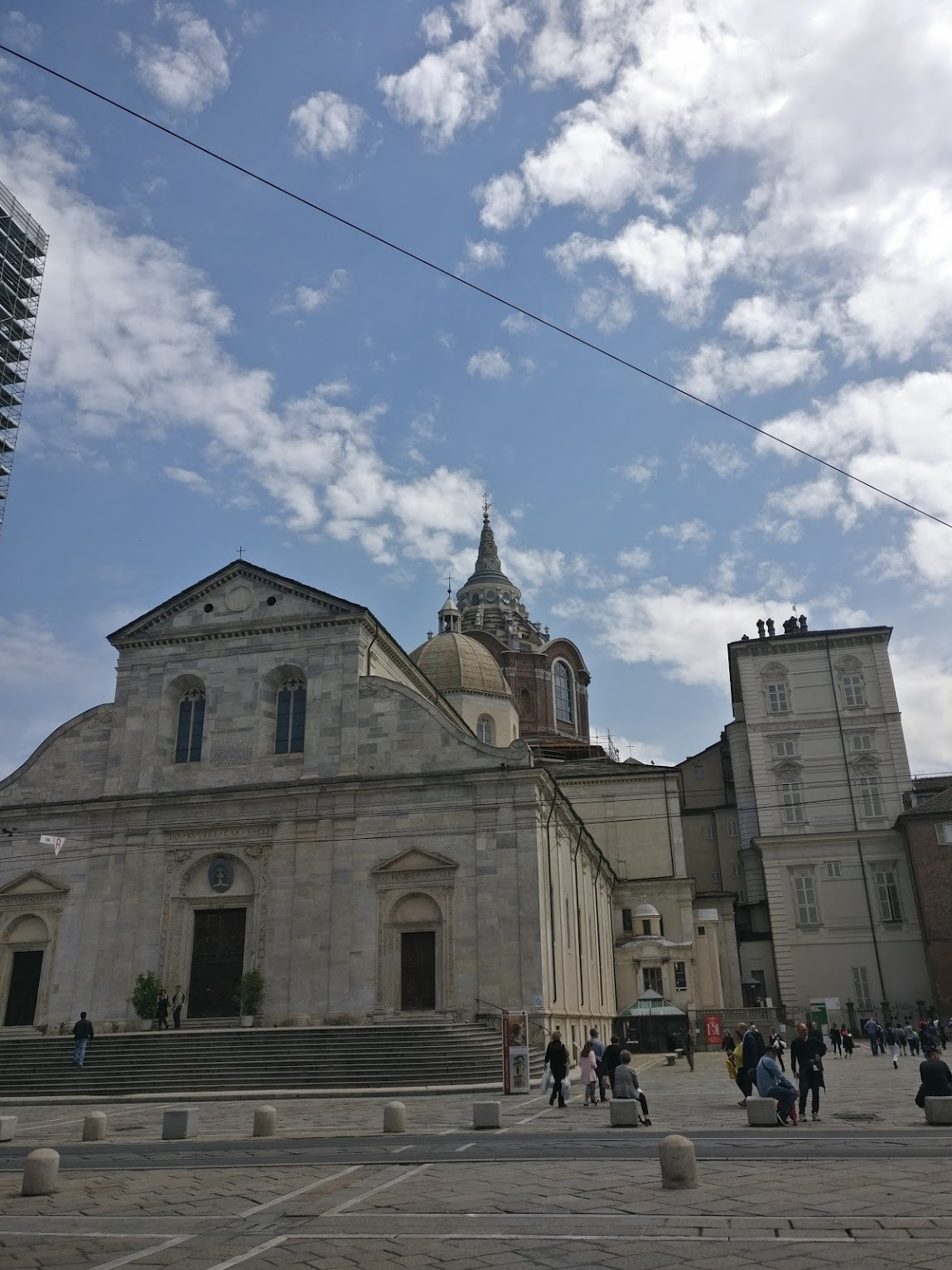
Juventus were taking on Bologna on Saturday evening. Our limited sightseeing around the city included visiting the Cathedral of Saint John the Baptist, where the Shroud of Turin is kept. The Shroud is a linen cloth believed to have a negative image of a crucified man, believed to be Jesus. We didn’t go inside the Cathedral because we were pressed for time after having woken up pretty late.
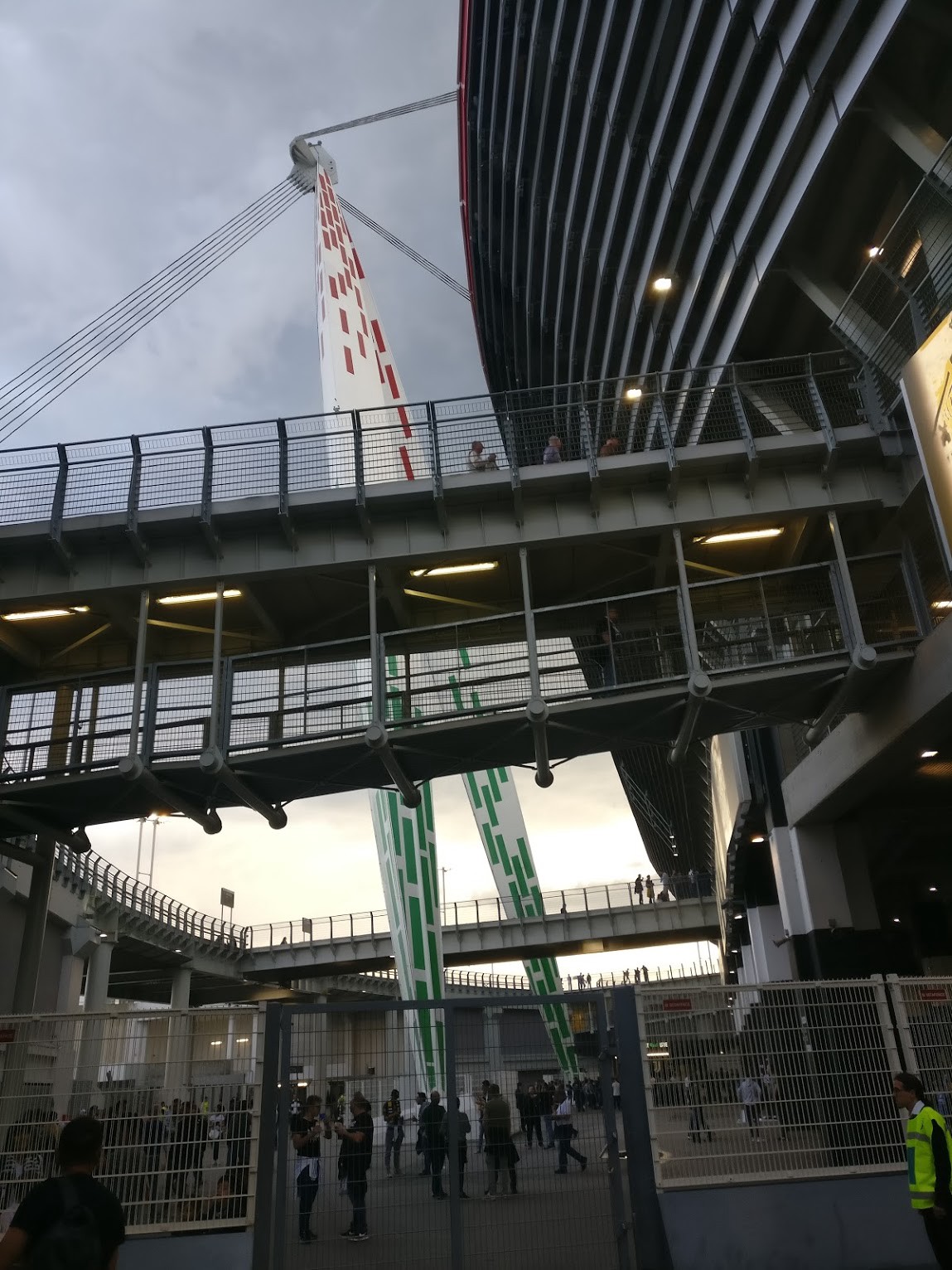
After completing our sightseeing, we took a bus towards Allianz Stadium, Juventus’ shiny new stadium, opened in 2011 at the site of their old stadium, Stadio delle Alpi. The new stadium is synonymous with Juve’s resurgence as a major footballing powerhouse in Europe, and is one of Italy’s few club-owned football stadiums. We got there about an hour before kickoff, and we could see the zebra-striped hoards of fans walking towards the stadium.
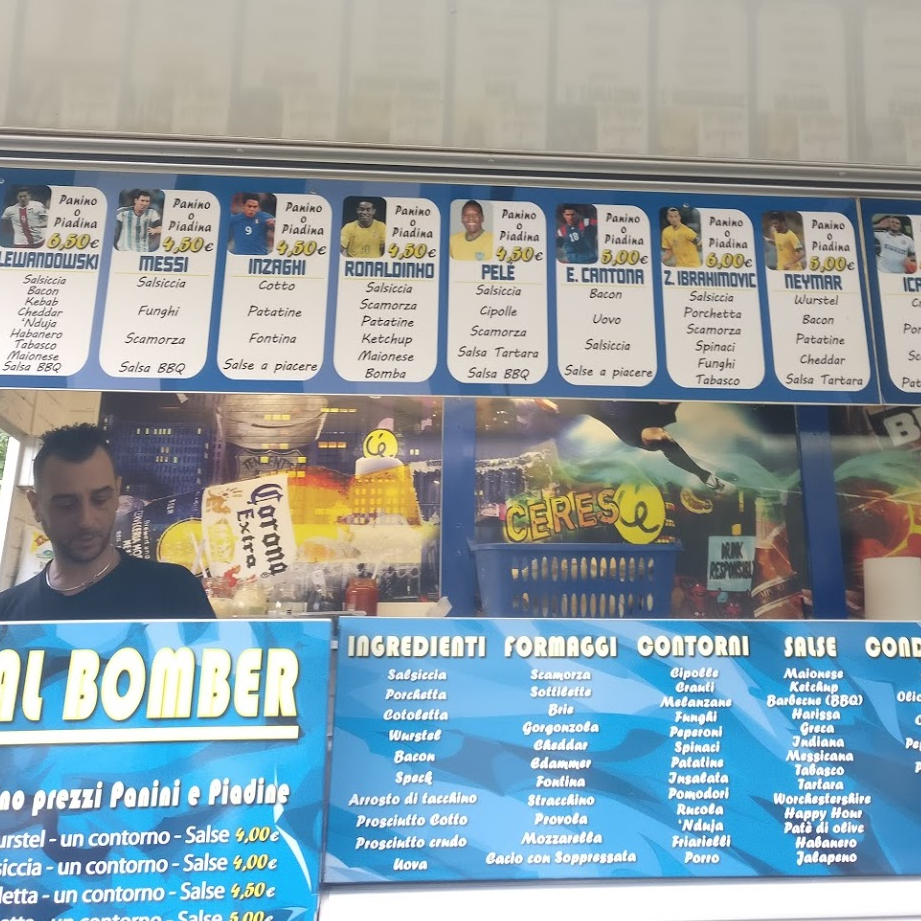
On our walk, we stopped at an interesting sandwich-kebab shop, where every sandwich or kebab was named after popular football players (mostly forwards). It put us in a quandary that I never knew could exist: Do we go for the sandwich that has ingredients that we like, or should we go for the sandwich named after a player we like? With my limited comprehension of the ingredients written in Italian, my friend and I stuck to our loyalties, as both of us are Chelsea fans, and so we went for the Drogba.
The stadium was magnificent, and its white tiled exterior was consistent with the other two Allianz-sponsored stadiums I had seen: the Allianz Arena in Munich, and the Allianz Riviera in Nice. Upon entering the stadium, there were a lot of pre-match festivities going on in the stadium concourse. We first visited the hair stylist, where I got Paulo Dybala’s number 10 printed on the side of my head. Our next stop was the Betfair Italia Foosball Competition. We signed up and got given the name “Team Rigore”, meaning defence. My foosball ability isn’t something I pride myself upon, so we got thrashed by two middle-aged Italian men. We were then interviewed after our defeat, and the whole interview was a struggle because it was in Italian.
Desperate to not stick out as “plastic” Juventus fans, we lied that we had travelled all the way from India to watch Juventus, even though I had travelled 3 hours on a bus and my friend had taken a 2 hour flight from London. After we got through the “who is your favorite Juventus player” question, we were asked for our predictions for an upcoming Italian cup final that Juventus were going to play against AC Milan. I don’t know why but I predicted a 4–0 win for Juventus. The host was amused and repeated my prediction in Italian, saying, “Quattro Zero”, followed by a few more words which I couldn’t understand, but judged it to be something along the lines of “this tourist doesn’t know anything about football” because it raised a laugh from the audience. By the time we were done with the interview, it was almost kick-off time, so we headed inside.
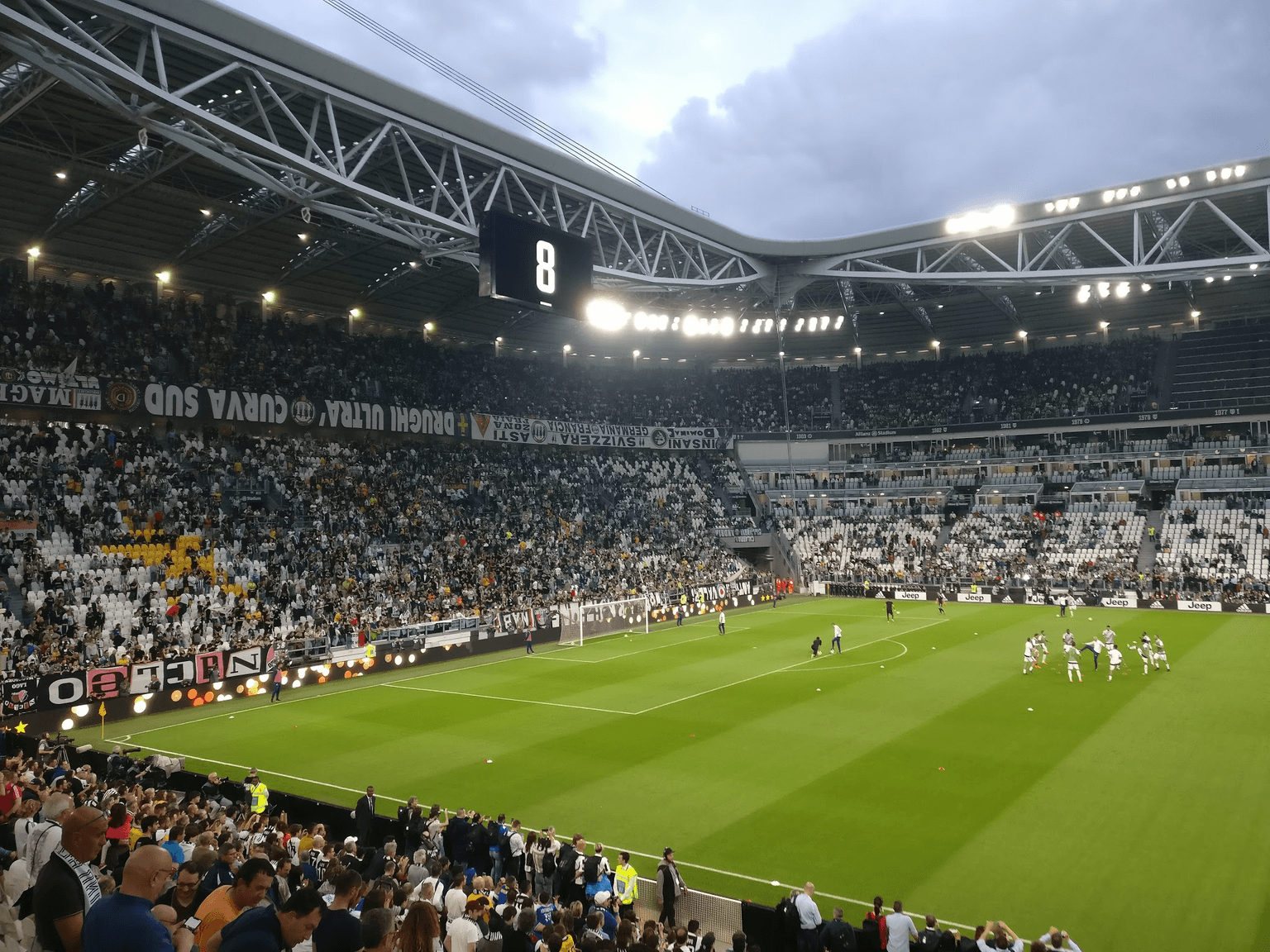
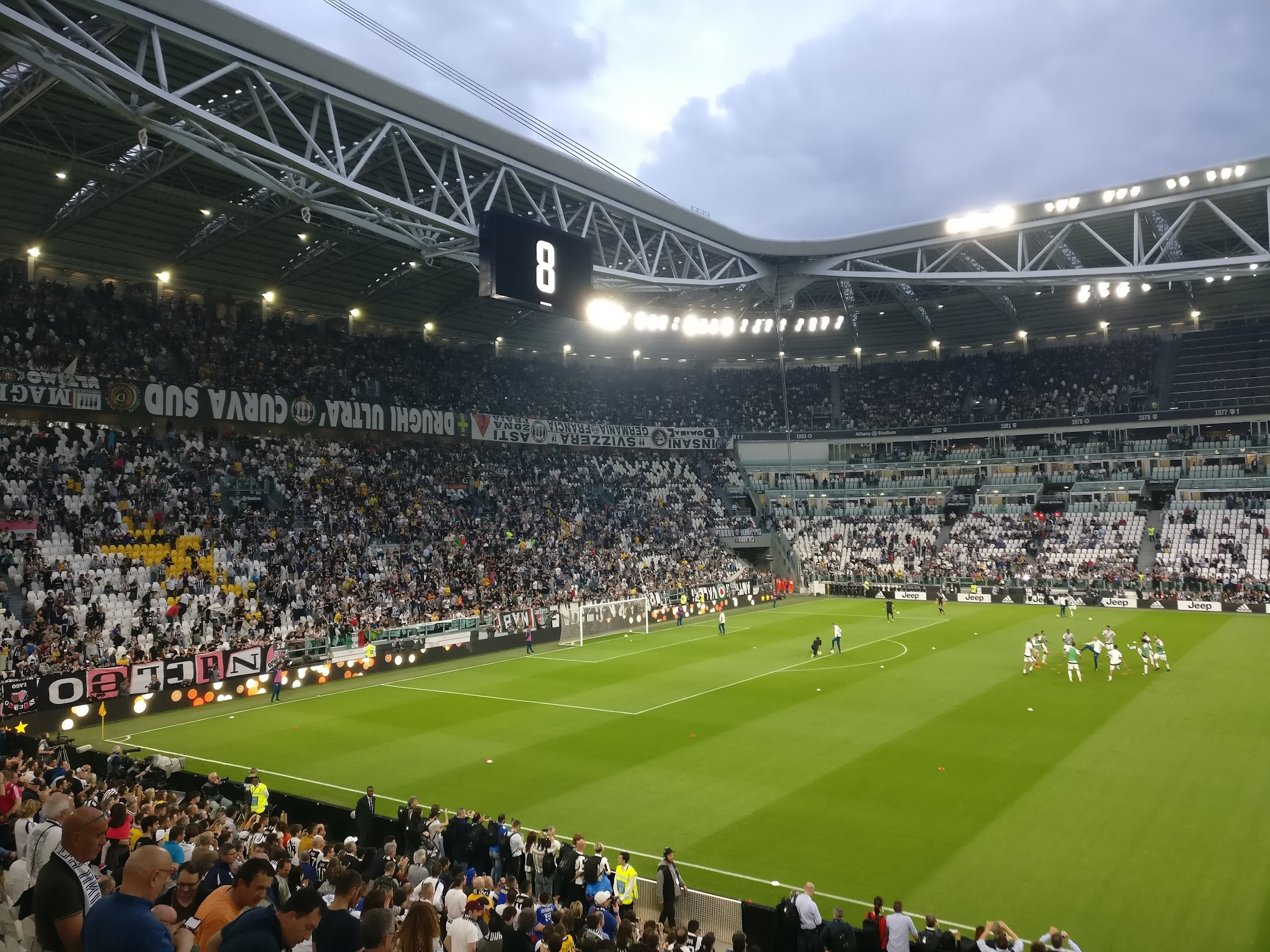
The pitch looked absolutely marvellous. The teams were completing their final warm-ups and there was a buzz of excitement in the stadium. Juventus were taking on Bologna. Juventus were in first place in the league, looking for their 7th consecutive Italian league title. However, they had recently been beaten at their home ground by second-placed Napoli; their lead in first place was intact but slender, and, with only 2 games remaining hence, they absolutely needed to get this win over Bologna to take a giant leap towards the title. Once the teams were done with their warm-ups, they went back inside the tunnels, and the pre-match festivities began. This involved a dimming of the stadium’s floodlights, and a countdown to the teams coming out. The light show was followed by an incredibly passionate singing of Juventus’ anthem, “Storia Di Un Grande Amore”, or “Story of a grand love”!
The stadium announcer then read the lineups, and by convention, only announcing the player’s jersey number and first name, leaving the last name to be shouted out by the spectators. The first couple of minutes in the game were fairly cagey, with both teams battling for possession early on. Juventus were stronger in midfield, and that showed when Claudio Marchisio played a delightful ball over the top of the Bologna defence to Gonzalo Higuain, only to be denied by the goalkeeper. I noticed that all the noise in the stadium had been coming from the stand I was in, further towards the North stand. It was the group of traveling Bolognese support, comprised mostly of shirtless men in purple scarves. It was pretty surprising because the stadium was packed to capacity.
Around the tenth minute, the Juventus ultras came alive and you could no longer here the Bologna supporters. Suddenly, fans from the Curva Sud, or South stand, started chanting in unison, which was picked up by the rest of the fans in the stadium. Zebra-striped flags were now being waved vigorously across the entire stadium. It was quite a spectacle for me sitting in the the stands, but I imagine it would have been pretty intimidating for the Bologna players. However, it didn’t seem to affect them much. 15 minutes later, Juventus’ legendary goalkeeper Buffon played a lethargic pass to defender Rugani, and the pass was intercepted by the Bologna attacker, who was subsequently brought down by Rugani. Penalty to Bologna, and the Curva Sud fell silent. As the penalty was being taken, the ultras behind Buffon tried there best to put off the penalty taker by hurling insults, whistling and jeering, but the Bologna player calmly dispatched the spot-kick, and Juventus had fallen behind.
After pretending to be a Juventus fan all day, I was pretty emotionally invested into the game. I didn’t want to watch the match where Juventus squander a golden opportunity to secure the title, and then walk back out of the stadium with dejected Juventus fans. At half-time, Juventus brought on Douglas Costa, the incredibly skilful Brazilian winger. The added bonus was that he was taking up position on the right wing, which was right in front of where I was sitting, so I had the best seats in the house to watch him humiliate defenders.
The change also meant a different tactical approach for Juventus. Five minutes into the second half, Juventus’ other winger, Juan Cuadrado, whipped a menacing cross aimed towards the three, ultimately redundant Juventus players in the box. The cross had too much pace on it, and a Bologna defender mis-kicked the ball into his own goal. Juventus were level and the stadium burst into life. The noise levels from the south stand rose to unprecedented levels, and Juventus now had all the momentum.
Even in the brief time he had been on the field, Douglas Costa had been giving the defender an absolutely torrid time. The Juventus midfield were constantly spraying long balls to Costa, who controlled those 40–50 yard aerial passes with immaculate precision, and began directly dribbling towards the defender at terrifying pace. In the 63rd minute, Costa, instead of dribbling, sent a looping ball that the keeper misjudged, leaving an empty net for midfielder Sami Khedira to tap the ball into. Juventus were ahead, and the sigh of relief could be felt across the stadium, as they took a giant step towards the league title. From then on, they never looked like losing the game. Douglas Costa was the creator yet again, as he received another long ball, beat the defender in the air, leapt on to the loose ball from his header, and laid a perfect pass to Paulo Dybala who slotted the ball into the goal with composure. With a two-goal lead, Juventus were comfortably home. The match ended 3–1 to Juventus, and the players took a lap around the stadium thanking their fans for their support.
It was a testament to Juventus’ iconic motto, “Fino alla Fine”, meaning until the end. They overturned a one-goal deficit and kept on fighting for a good result, and that is essentially what champions are made of. Walking out of the stadium felt like a party, with a lot of chanting still going on. I could hear Douglas Costa also in a couple of chants, so it was safe to say that the fans were delighted by his impact. We exited from a different part of the stadium, and walked towards the bus stop that would take us back to our AirBnb, but we noticed after waiting for a while that there were clearly too many Juventus supporters and every bus that came was instantly filled to the brim, and after seeing a lot of buses go by, we decided we’ll just walk it.
It was only about 9 PM, but Turin seemed pretty empty and desolate. Most roads in the city seemed really wide, but there weren’t a lot of cars going by. We passed by a lot of housing complexes with parks, but there was barely any activity in those parks. Perhaps everyone was still at the stadium and hadn’t found an empty enough bus to get back home. Most shops were still open, but there weren’t a whole lot of people inside them. The whole walk had a pretty eerie post-apocalyptic feel to it, which was very much in contrast with what we had witnessed at the stadium. I was also consumed by envy. I had travelled a long way to experience this, and the idea that there are people who get to go to the stadium and experience this every second week made me jealous.
The day after the game, we made our way to the bus station, which was pretty much just a bunch of shops next to a road: a bunch of buses were supposed to stop there and occupy the service lane. There was a small café next to the bus stop, where we decided to have some kebab and coffee. The barista tried to make small-talk, but the language barrier made it difficult to communicate. We told him we had come to Turin and watched last night’s game against Bologna. The barista spoke little to no English, and we spoke zero Italian, but somehow we still held a conversation about Juventus, how they were unfairly knocked out of the Champions League by a poor refereeing decision, and how much money Andrea Agnelli, the owner of Juventus has. Football is a universal language. It gives you the illusion that you understand languages that you clearly don’t, as we felt we could understand Italian while we were talking to the Barista.
That feeling faded pretty fast. As we were leaving and paying for our food, the barista said something to us, which had no football-related words, and we were completely clueless. He said a couple more things in Italian, and we said “what” a couple more times. We had reached a linguistic deadlock: when you run out of synonyms and there is absolutely no understanding whatsoever, both parties in the conversation just smile. We had no idea what he was asking, and somehow it was an impediment to us paying and leaving.
There was man at the counter waiting for the barista to hand him something he had ordered, and there was a moment where he ran out of patience and said to us in Punjabi:
“Woh poochh rahein hai ki aap saath mein paise doge ya alag-alag”.
I don’t speak Punjabi, but after growing up in Delhi, it’s hard not to make some sense out of the words that are phonetically similar to their Hindi counterparts. My friend, who spoke Punjabi, instantly replied, and the gentleman, in fluent Italian, informed the barista that we were paying separately. Neither of us was expecting to hear Punjabi at a random bus station in Turin, and our surprise probably made the guy laugh. We spoke to him for a few minutes, and it turned out he was the the driver of a bus heading to Germany.
Subsequently, a bus with a destination sign saying Marsiglia arrived at the bus station. Initially, I thought it was some other city in Italy that I hadn’t heard of, but I checked with the driver who had stepped out for a smoke, and Marsiglia was basically Marseille in Italian, and I made sure that the bus had a stopover at Nizza (Nice). I could tell that this driver was not Punjabi. I boarded the bus, and the WiFi connected this time, but the damage had already been done. I was convinced that I would be leaving Nice to watch another football game soon, and I needed a SIM with mobile data this time. On my way back, I was also able to catch a glimpse of the stunning Allianz Riviera stadium from the highway as we entered Nice.
Two weeks later, in Nice, I watched Juventus take on AC Milan for the Italian Cup Final on the television. They emerged 4–0 winners, courtesy of a Mehdi Benatia brace, a goal from Douglas Costa and an own goal in the second half. So much for the tourist not knowing what he’s talking about.
The writer spent six months in Nice, criss crossing Europe on footballing pilgrimages like this one, whilst also working as a software developer. This is a dispatch from one such journey, born during the return trip to Nice – but eventually taking a year to polish.