
For me, the most remarkable personal discovery in 2015 was Mission Prabhughaat. The concept of Shramdaan was inspiring - the team at Kashi gave me hope and made me want to be involved.
The year ended, however, with me having been a well-meaning supporter of the movement (on social media) and nothing more. There was a strong desire to contribute, but perhaps, as with most people trying to do new things, the initial static friction was too great to overcome.
The job of countering this resistance was done for me by Malcolm Gladwell, in the middle of 2016; wherein he, in his book, "The Tipping Point", introduced me to the most remarkable personal discovery of 2016 : the Broken Windows theory. The theory had, and continues to have, great resonance within me not because I have unshakeable faith in its correctness and applicability in all contexts - but because it helped me give a name to beliefs I have held for a very long time.
A simple summary of the theory is this: getting rid of graffiti inside and outside New York City Subway cars (may have) helped cause a marked fall in incidents of serious crime in the 1950s.
Reading this made me instantly draw a parallel with my city, walls and the public sanitation problem. I was (and still am) absolutely convinced that just like neighbourhoods with a low degree of maintenance (broken windows) would draw higher rates of serious crime, areas in our cities that have today become ugly mass garbage disposal spots are the result of walls that were spat on, defaced with posters and littered around by small vendors.
How do we fix this? There is the oft-used list in essay questions one could answer this question with : government policy; bureaucratic implementation; an aware citizenry and a dedicated municipal body. The question that we probably need to be asking, and consequentially answering, is how do we start fixing this in an absence of all of these? For me - we need to start painting the walls.
The bad news is that this answer gets me a variety of responses but most of them are confused looks and snide remarks.
The good news, however, is that I'm not the only one who thinks this way.
The even better news is that it works.
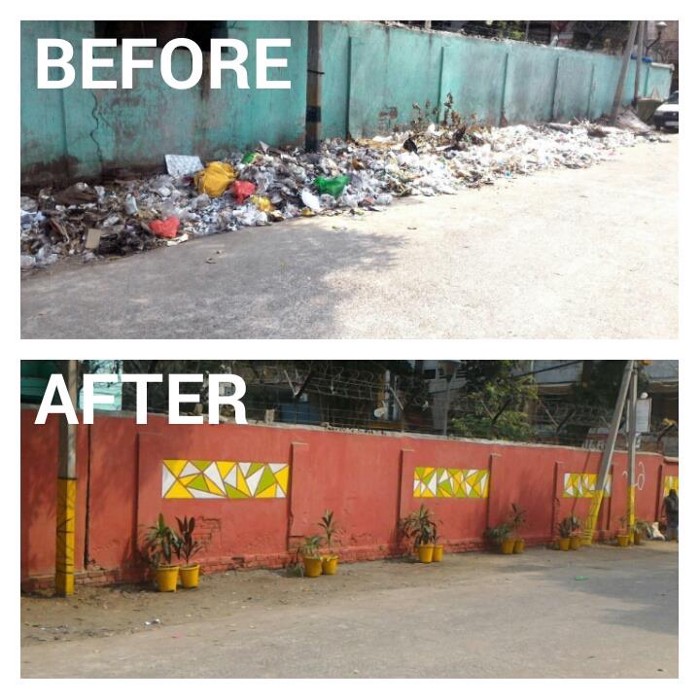
Results from a "spot-fix" I attended along with a few other volunteers from WMTC:
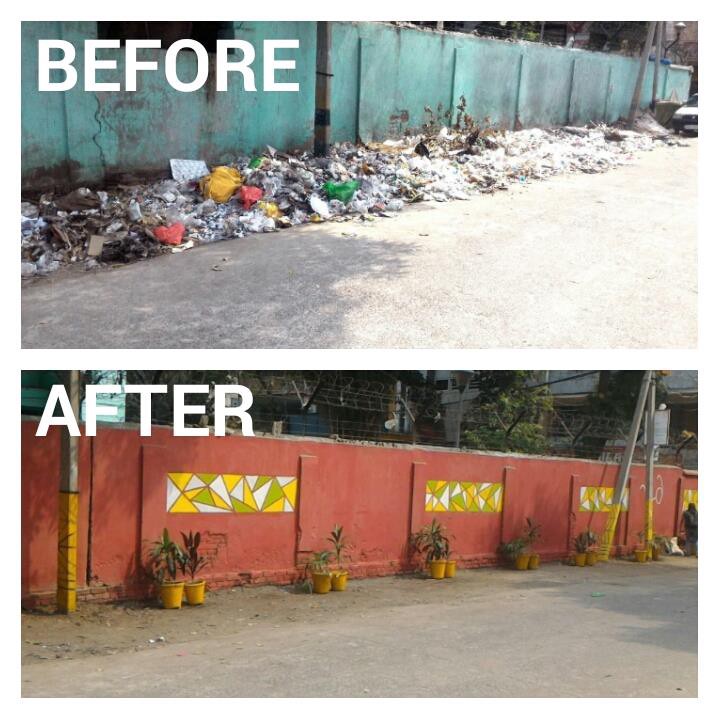
And, three months later:
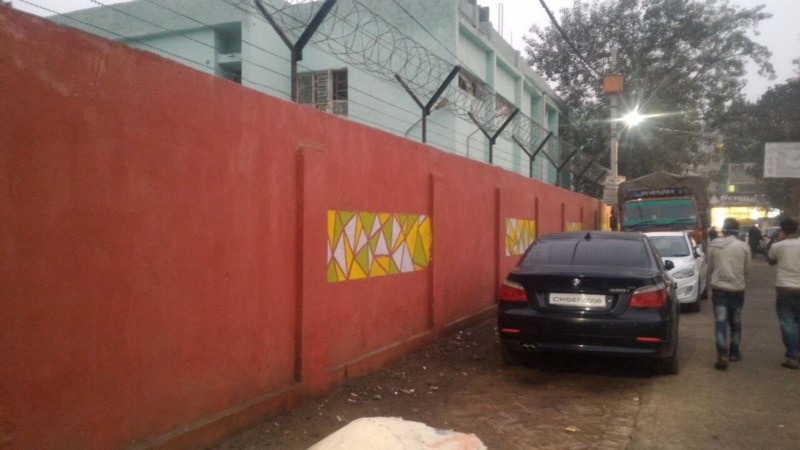
Cleaning the spot would have been one thing, but achieving that level of sustenance is another. That open dumping lane in Tilak Nagar (New Delhi) wasn't just cleaned up; it was transformed into a usable public space.
Movements like these (WMTC, The Ugly Indian) are all branches off of the same trunk: an urge to exercise whatever little agency we have as citizens in trying to clean our cities. It's an urge that's been around for a while, suffers its standard troughs and crests but perseveres, because the macro trend remains upwards, and to the right.
Sustenance is never without cost: the economic incentive to keep such a movement running has to be inevitably found. Perhaps these organisations can evolve into co-operatively owned public space maintenance bodies? There is no easy answer.